When your foundation has a problem, the first question most North Texas homeowners ask is: “How much will this cost?” But before cost even enters the conversation, there’s a more fundamental question to answer — one that determines everything about how your foundation gets repaired, how long that repair takes, what it costs, and what kind of warranty you can expect.
That question is: Do you have a pier and beam foundation or a slab foundation?
These are two fundamentally different structural systems. They fail in different ways, show different warning signs, and require completely different repair approaches. A homeowner who understands the difference walks into the repair process with clarity and confidence. One who doesn’t often gets confused by competing estimates, mismatched terminology, and repair scopes they can’t evaluate.
This guide covers everything North Texas homeowners need to know about both foundation types — how they work, how they fail, how they’re repaired, and how to know which one you’re standing on.
First: How Do You Know Which Foundation Type You Have?
Before we compare them, let’s make sure you know what you’re working with.
You likely have a pier and beam foundation if:
- Your home was built before 1960 (though many pier and beam homes were built through the 1970s)
- You can see a crawl space beneath your home, or there’s an access hatch somewhere along the foundation perimeter
- Your floors have some bounce or flex to them
- You can visually see wooden beams or concrete block piers from underneath
- The ground floor feels noticeably elevated from ground level — even just 12 to 18 inches
You likely have a slab foundation if:
- Your home was built after 1970 (slabs became dominant in Texas during the postwar suburban boom)
- There is no visible crawl space or access hatch at ground level
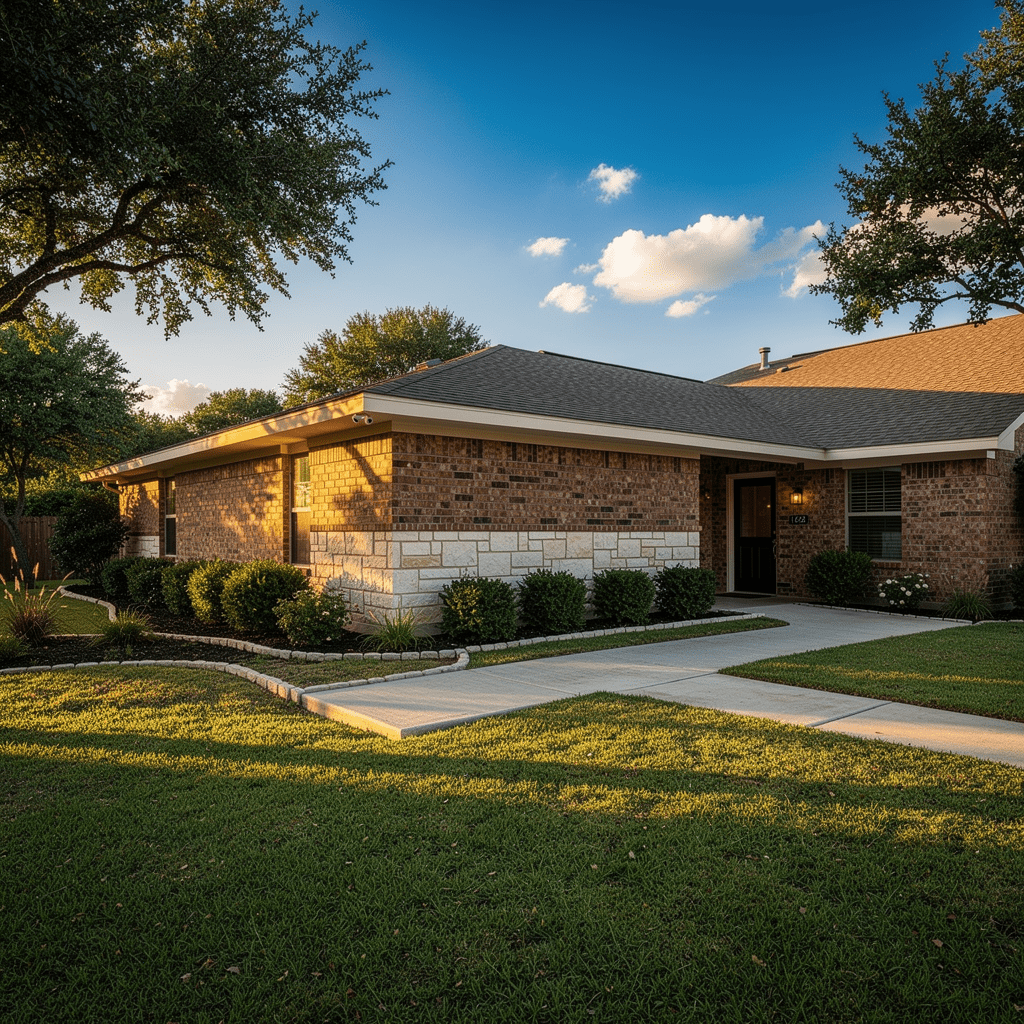
- Your home sits flush to the ground with no visible gap between the exterior walls and the soil
- You have tile or hardwood flooring laid directly on concrete
If you’re still unsure, your local building department or a licensed structural engineer can confirm your foundation type. In most cases, a quick look around the exterior of the home makes it obvious.
Pier and Beam Foundations: How They Work and How They Fail
The Structure
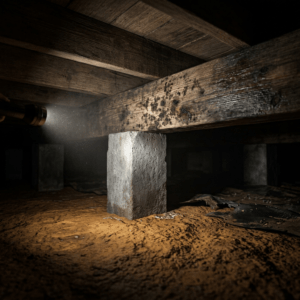
A pier and beam foundation elevates your home above the ground on a grid of vertical supports — the “piers” — which hold up a network of horizontal wooden beams. Those beams in turn support the floor joists and the structure of your home above. The piers themselves may be made of concrete, concrete block, brick, or treated wood, depending on the age and construction of the home.
The space beneath the floor — the crawl space — is typically 18 to 36 inches in height. This is one of the most distinctive advantages of pier and beam construction: it provides access to plumbing, electrical conduit, and structural components without any demolition.
Why Pier and Beam Foundations Fail in North Texas
In North Texas’s clay-heavy soil environment, pier and beam foundations face a specific set of vulnerabilities:
Pier settlement and shifting. As the clay soil beneath the piers expands and contracts seasonally, the piers themselves can shift, tilt, sink, or lose contact with the supporting soil. When this happens, the beams they support lose their bearing points and begin to sag.
Wood deterioration. The crawl space environment — typically humid and prone to moisture accumulation — is ideal for wood rot, fungal growth, and termite activity. Beams and joists in compromised crawl spaces can deteriorate significantly before any surface symptoms appear inside the home.
Beam deflection and sagging. Over decades of loading and soil movement, the beams that span between piers can begin to sag under the weight of the structure above. This manifests as the familiar spongy, uneven floors that many older North Texas homes are known for.
Moisture intrusion. Without proper vapor barriers and drainage, the crawl space can become a site of chronic moisture accumulation, accelerating both wood decay and the soil instability beneath the piers.
How Pier and Beam Foundations Are Repaired
Pier and beam repair is generally more accessible — and more flexible — than slab repair, because the crawl space provides direct access to the structural components without excavation.
Common pier and beam repair methods include:
- Pier replacement or supplementation — failed or compromised piers are replaced with new concrete piers, sistered alongside existing structure, or supplemented with additional support points
- Beam sistering — deteriorated or cracked beams are reinforced by attaching new lumber alongside the original
- Beam replacement — severely damaged beams are fully removed and replaced
- Shim adjustments — steel or composite shims are used to re-level the beam network to its correct elevation
- Vapor barrier installation — a ground-level moisture barrier is installed in the crawl space to reduce humidity and protect wood components
- Mudsill and sill plate repair — the connection points between the beams and the foundation are addressed when rot or shifting has compromised them
At Tri-County Foundation Repair, pier and beam work is covered by our Titan Shield 2-Year Warranty — one of the strongest warranty commitments in the North Texas market. For most pier and beam jobs, our crews are in and out within 2 to 3 days.
Slab Foundations: How They Work and How They Fail
The Structure
A slab foundation is a single continuous pour of reinforced concrete — typically 4 to 6 inches thick in the field, with thickened beams along the perimeter and at interior grade beam locations — that serves simultaneously as the structural foundation and the finished floor substrate.
The slab sits directly on prepared soil, typically with a gravel base and a moisture barrier beneath. Plumbing lines are embedded within the concrete or run beneath it before the pour.
Modern post-tensioned slabs include steel cables tensioned after the concrete cures, giving the slab additional resistance to cracking under differential soil movement. Older conventionally reinforced slabs rely entirely on rebar grids for their tensile strength.
Why Slab Foundations Fail in North Texas
Slab foundations and Texas clay soil have a complicated relationship. The clay’s expansion and contraction cycles act directly on the underside of the concrete, and because the slab is rigid, it has no capacity to flex with the movement.
Differential settlement. When sections of the supporting clay soil lose moisture and contract, the slab loses support in those areas and deflects downward under the weight of the structure. This is the most common cause of slab cracking.
Upheaval. Less common but more severe, upheaval occurs when moisture-saturated clay beneath the center of the slab expands upward, doming the interior of the foundation while the perimeter remains anchored. This causes the most dramatic and disruptive cracking patterns.
Plumbing failures beneath the slab. When water or sewer lines beneath the slab leak, they create concentrated zones of chronic soil saturation. The localized expansion from a long-running slab leak can cause severe, targeted foundation damage in the area directly above the leak.
Edge settlement. The perimeter of the slab — closest to the exterior soil and most exposed to the drying effects of heat, drought, and vegetation — is the most common location for initial settlement. This produces the classic pattern of doors and windows near exterior walls that begin sticking or showing diagonal cracks.
How Slab Foundations Are Repaired
Slab repair is more complex and invasive than pier and beam repair because the structure being repaired is a solid concrete mass with embedded systems.
Common slab repair methods include:
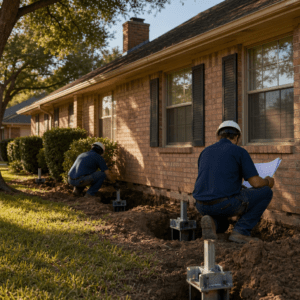
Steel push piers. Hydraulic rams drive steel pipe sections deep into the earth — through the unstable clay layer — until they reach load-bearing soil or bedrock. The slab is then lifted and supported by these permanent steel columns. This is one of the most durable and long-lasting slab repair methods available.
Helical piers. Steel shafts with helical flights are mechanically screwed into the soil, providing resistance through both bearing and helical friction. Used in situations where push pier installation may not be suitable.
Slab tunneling. When interior plumbing beneath the slab needs repair, or when interior piers need to be installed, tunneling beneath the slab allows access without cutting through the concrete. At Tri-County Foundation Repair, our tunneling crews can typically complete this work within 5 to 7 days while the family remains in the home.
Mudjacking and foam injection (limited applications). These methods inject material beneath the slab to fill voids and lift settled sections. They are appropriate for minor, localized settlement in non-structural areas — driveways, sidewalks, patios — but are generally not considered a structural solution for residential foundation repair.
At Tri-County Foundation Repair, all slab pilings that are pushed to refusal carry a lifetime warranty. This is our highest level of warranty coverage and reflects the permanence of properly installed push pier systems.
Side-by-Side Comparison: Pier & Beam vs. Slab
| Pier & Beam | Slab | |
|---|---|---|
| Construction era (typical) | Pre-1970 | Post-1970 |
| Common failure mode | Pier settlement, wood decay, moisture | Differential settlement, upheaval, plumbing |
| Repair access | Crawl space — no excavation required | Excavation or tunneling required |
| Typical repair timeline | 2–3 days | 3–7 days depending on scope |
| Repair cost range | $3,500–$20,000+ | $5,000–$30,000+ |
| Warranty (Tri-County) | Titan Shield 2-Year | Lifetime on pilings pushed to refusal |
| DIY prevention options | Crawl space moisture management | Perimeter moisture consistency |
Which Foundation Type Is More Expensive to Repair?
Neither foundation type is categorically more expensive than the other — it depends entirely on the severity and scope of the damage. What is generally true is that slab repairs involving tunneling or multiple pier installations tend to run higher than comparable pier and beam work, because the labor and access requirements are more demanding.
Small pier and beam repairs — adjusting shims, replacing a failed interior pier, sistering a beam — can be completed efficiently and cost-effectively. Large-scale slab repairs involving 10 or more push piers, tunneling, and plumbing remediation represent some of the highest-cost foundation projects.
The most important factor in controlling costs is timing. Foundation damage in both systems is progressive — meaning damage that costs $6,000 to repair today may cost $18,000 or more if left unaddressed. We cover this cost progression in detail in our post on how much waiting actually costs, month by month.
Does Your Foundation Type Affect Your Home’s Sale?
Yes, meaningfully so. In the North Texas real estate market, both foundation types are common enough that buyers and their agents are familiar with both — but the documentation and disclosure requirements are the same regardless of type. A home with a documented, engineer-verified foundation repair — complete with warranty — is a far stronger position than one with obvious symptoms and no repair history.
If you’re buying or selling a home and foundation type or condition is part of the conversation, our guide on what foundation issues mean for your real estate deal in Tarrant County walks through the specific implications for buyers, sellers, and agents.
The Tri-County Foundation Repair Process Applies to Both Foundation Types
Whether you have a 1952 pier and beam craftsman in Weatherford or a 1988 slab ranch home in Azle, our process is the same: we start with a licensed structural engineering inspection before any repair work is proposed.
That $1,100 engineering fee is not a sales tool — it’s a professional assessment that gives you an accurate, independent diagnosis of what’s actually happening beneath your home. The report belongs to you. You can take it to any contractor. And if you choose Tri-County Foundation Repair, that fee is credited against your project estimate.
For a full breakdown of what that engineering inspection includes and why it protects you, see our post on what the $1,100 foundation inspection actually covers.
To get started, call us at (817) 406-4094 or reach out through our contact form. We serve homeowners across Tarrant, Wise, and Parker Counties, TX.
Frequently Asked Questions: Pier & Beam vs. Slab Foundation Repair
What is the difference between pier and beam and slab foundations?
A pier and beam foundation supports your home on a grid of vertical piers and horizontal beams, leaving a crawl space beneath the structure. A slab foundation is a single continuous pour of reinforced concrete that sits directly on the ground. Pier and beam construction was dominant in Texas through the mid-20th century; slab construction became the standard from the 1970s forward. Both types are vulnerable to North Texas clay soil movement but fail in different ways and require different repair methods.
How do I know if I have a pier and beam or slab foundation?
The easiest indicator is whether your home has a crawl space beneath it. If you can see a gap between your home and the ground, find an access hatch along the foundation perimeter, or notice that your floors have some flex or bounce, you likely have pier and beam construction. If your home sits flush to the ground with no visible gap and your floors are rigid, you almost certainly have a slab. Homes built before 1960 in North Texas are typically pier and beam; homes built after 1975 are almost always slab.
Which is better — a pier and beam or slab foundation?
Neither is objectively superior. Pier and beam foundations offer the advantage of crawl space access, which makes plumbing and structural repairs significantly easier and less expensive. Slab foundations eliminate the moisture and wood decay risks associated with crawl spaces and are generally more cost-effective to build. In North Texas’s expansive clay soil environment, both types face meaningful challenges — the key is proper maintenance and timely repair when problems develop.
Is pier and beam foundation repair cheaper than slab repair?
Generally, pier and beam repairs are more accessible and can be less expensive for comparable scopes of work, because the crawl space eliminates the need for excavation or concrete cutting. However, severely deteriorated pier and beam systems — involving multiple pier replacements, beam replacement, and moisture remediation — can become expensive. Slab repairs requiring tunneling or numerous push piers tend to represent higher overall costs. In both cases, the severity of the damage matters far more than the foundation type in determining final cost.
How long does pier and beam foundation repair take?
Most pier and beam foundation repairs in North Texas are completed within 2 to 3 days. The crawl space access means crews can work efficiently without excavation or concrete work. More complex repairs involving beam replacement, vapor barrier installation, or extensive pier work may take 3 to 5 days. Homeowners rarely need to vacate the property during pier and beam repair.
How long does slab foundation repair take?
Slab foundation repairs typically take 3 to 7 days depending on the scope. Jobs involving only exterior pier installation may be completed in 2 to 3 days. Projects requiring tunneling beneath the slab for interior pier installation or plumbing repairs generally take 5 to 7 days. In most cases, families can remain in the home throughout the repair process.
What kind of warranty do pier and beam foundation repairs come with?
Warranty coverage varies by contractor and repair method. At Tri-County Foundation Repair, pier and beam repairs are covered by our Titan Shield 2-Year Foundation Warranty, which provides two years of coverage on the repair work performed. This is one of the more comprehensive warranty offerings available from a North Texas foundation repair company. For slab repairs, all pilings pushed to refusal carry a lifetime warranty.
Can pier and beam foundations be converted to slab?
Converting a pier and beam foundation to a full slab is theoretically possible but is an extremely major structural undertaking — essentially replacing the entire foundation of the home — and is rarely justified in residential applications. It is cost-prohibitive in most scenarios and unnecessary if the pier and beam system can be properly repaired and maintained. In most cases, a well-executed pier and beam repair is a far more practical and cost-effective solution than conversion.