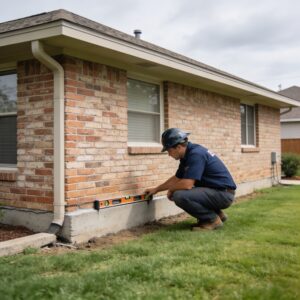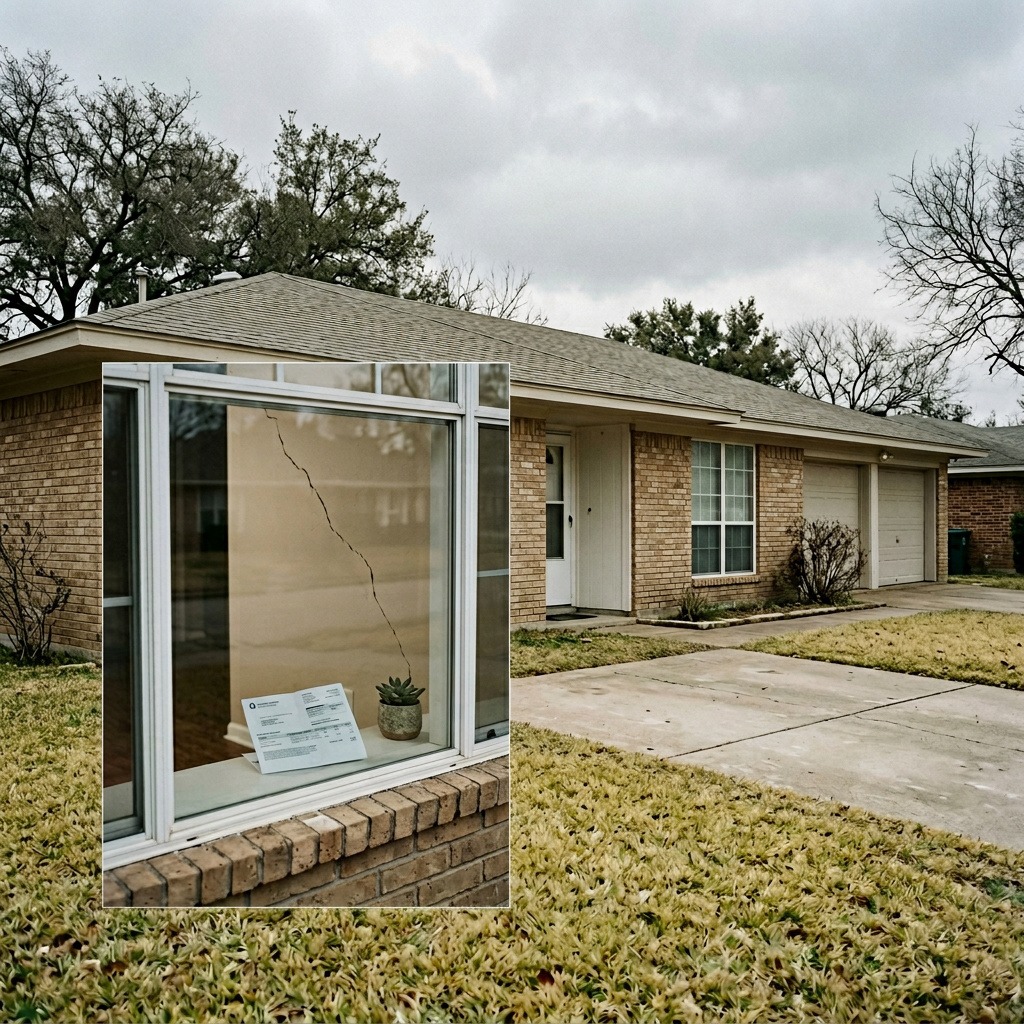
Most North Texas homeowners know that clay soil causes foundation problems. What fewer people realize is that one of the most destructive forces acting on a slab foundation has nothing to do with weather or drought. It is hiding directly beneath the concrete, and it runs on your water bill.
A slab leak is a break or leak in a water supply or drain line that runs beneath or within a concrete slab foundation. In North Texas, where the majority of homes built after 1970 sit on slab foundations, slab leaks are one of the most underdiagnosed and underestimated causes of severe foundation damage. They are silent, they are slow, and by the time most homeowners discover them, the damage to the foundation is already well underway.
This guide explains exactly how slab leaks form, how they damage foundations in the specific soil conditions of Tarrant, Wise, and Parker Counties, how to recognize them early, and what to do when you find one.
What Is a Slab Leak?
A slab leak is any leak in a plumbing line that is located beneath or encased within a concrete slab foundation. In residential construction, both water supply lines and drain lines are commonly routed beneath the slab before concrete is poured, making them inaccessible without either excavating from outside the foundation or tunneling beneath the slab from inside.
There are two primary categories of slab leaks:
Supply line leaks. These involve pressurized hot or cold water lines. Because the water is under constant pressure, even a small pinhole leak can deposit significant water volume into the soil beneath the slab over days and weeks. Supply line leaks are often detectable through elevated water bills or the sound of running water when no fixtures are in use.
Drain line leaks. These involve waste or drain pipes that carry water out of the home. Drain line leaks are typically less visible on a water bill but can introduce large volumes of water into the foundation soil during normal household use. They are often harder to detect and frequently remain undiagnosed longer than supply line leaks.
Both types create the same core problem: chronic, concentrated moisture accumulation in the clay soil directly beneath the foundation structure.
Why Slab Leaks Are Especially Destructive in North Texas
In a region with sandy or loam soil, a slab leak would be a plumbing problem first and a foundation problem second. In North Texas, where the soil beneath virtually every slab foundation is high-plasticity clay, the consequences are reversed.
Here is the mechanism: North Texas clay soil expands dramatically when it absorbs moisture. A slow slab leak introduces water continuously into a localized zone of clay soil. That zone expands. The expansion pushes upward against the underside of the slab. The slab, being rigid concrete, cannot flex to accommodate the pressure from below. It cracks.
Simultaneously, the surrounding soil that is not receiving that water continues its normal seasonal contraction during dry periods. The result is severe differential movement: one section of the foundation is being pushed up by chronically saturated, swelling clay while the rest of the foundation settles normally. This combination of localized uplift and general settlement produces some of the most significant crack patterns a slab foundation can experience.
This is why slab leaks that go undetected for six months or more in North Texas can produce damage that looks, from the inside, like years of accelerating foundation failure. The clay soil’s natural reactivity turns a plumbing problem into a structural emergency.
How to Recognize a Slab Leak
The earlier a slab leak is caught, the lower the combined cost of plumbing repair and foundation remediation. Here are the signs to watch for:
Unexplained increase in water bill. This is often the first indicator of a supply line leak. If your monthly water usage has climbed without any corresponding change in household behavior, investigate before assuming the meter is wrong.
Sound of running water with no fixtures in use. Turn off all fixtures and appliances that use water. If you can still hear water moving anywhere in the home, a pressurized leak somewhere in the system is likely.
Hot spots on flooring. If a section of your floor is noticeably warmer than the surrounding area, a hot water supply line may be leaking beneath the slab in that location.
Cracks appearing in unusual patterns. Most exterior clay soil movement produces diagonal cracks at door and window corners. Slab leaks tend to produce cracks that originate or concentrate near the center of the home, in areas distant from the exterior walls, or in patterns that don’t correspond to the typical perimeter settlement signature. For a detailed breakdown of what different crack patterns signal, see our guide on what those wall cracks in your house really mean.
Damp flooring or mold near the floor level. Moisture wicking through the slab from a leak below can produce visible dampness on tile grout lines, soft spots in hardwood flooring, or mold growth at the base of walls.
Sudden foundation symptoms following a plumbing event. If you noticed foundation symptoms, including sticking doors, new cracks, or floor changes, beginning shortly after a known plumbing issue or water service interruption, the two events are likely connected.
The Timeline: How Quickly a Slab Leak Becomes a Foundation Problem
The speed at which a slab leak progresses to foundation damage depends on the leak rate, the soil conditions in that specific zone, and the season. Here is a general progression:
Weeks 1 through 4: The leak saturates the immediate soil zone. No visible foundation symptoms yet. Water bill may show a slight increase.
Months 1 through 3: The saturated clay zone begins to expand. Localized uplift may begin. Hairline cracks may appear in flooring or drywall that are easy to dismiss.
Months 3 through 6: Differential movement between the leak zone and surrounding foundation becomes measurable. Cracks become visible and progressive. Doors or windows in the affected area of the home may begin to bind or misalign.
Months 6 and beyond: Significant structural damage is now present. The repair scope has expanded from a plumbing fix to a combined plumbing and foundation project involving tunneling, pier installation, and potentially interior finish work.
This progression is why early detection matters so dramatically. Our post on how much waiting actually costs month by month documents the financial consequences of delay across the full range of foundation damage types.
Diagnosing a Slab Leak: The Professional Process
If you suspect a slab leak, the diagnostic process involves two separate assessments: one for the plumbing and one for the foundation.
Plumbing leak detection. A licensed plumber uses one or more of the following methods to locate and confirm a slab leak: hydrostatic pressure testing (pressurizing individual lines and checking for pressure loss), electronic leak detection equipment, acoustic listening devices, and in some cases thermal imaging cameras. A thorough plumbing assessment will identify the leak location, the line affected, and the preferred access method for repair.
Foundation engineering assessment. Once a slab leak is confirmed, a structural engineering inspection should be performed to document the foundation’s current condition, identify any differential movement that has occurred, and determine whether foundation repair is needed in addition to plumbing repair. This is not optional. Many homeowners repair the plumbing and consider the problem solved, only to discover months later that the damage to the foundation was already done and is continuing to manifest.
At Tri-County Foundation Repair, our engineering-first process is designed exactly for situations like this. The engineering report documents the foundation condition independently before any repair scope is proposed, protecting the homeowner in any insurance claim process and ensuring the repair addresses the actual damage. For a full overview of what that inspection includes, see our post on what the $1,100 foundation inspection actually includes.
How Slab Leak Foundation Damage Is Repaired
The repair scope for slab leak foundation damage depends on how long the leak has been active and how much differential movement has occurred.
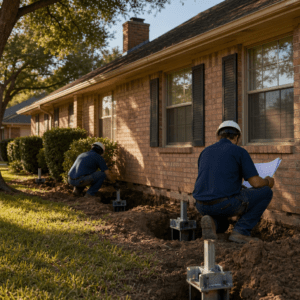
Plumbing repair first. The active leak must be stopped before any foundation work is meaningful. Plumbing repair beneath a slab requires either tunneling beneath the foundation from inside the home or excavation from outside. Tunneling is the most common approach for interior line leaks and typically requires 5 to 7 days to complete.
Soil stabilization. After the leak is stopped, the chronically saturated clay zone needs time to equilibrate. In some cases, engineers will recommend a waiting period of 30 to 90 days to allow the soil to begin normalizing before foundation correction is attempted. This prevents the repair from being performed on soil that is still actively moving.
Foundation correction. Once the plumbing is repaired and the soil has stabilized, foundation repair addresses the differential movement that occurred. This may involve push pier installation to re-establish load-bearing support in the affected zone, concrete crack repair, and post-repair engineering verification.
Interior finish work. Tunneling beneath a slab requires opening and restoring finished flooring in the access area. At Tri-County Foundation Repair, our partnership with Lawrence Construction Services provides a turnkey path from foundation repair through interior restoration without the homeowner needing to coordinate multiple contractors.
Insurance Coverage for Slab Leak Foundation Damage
Many Texas homeowners assume their homeowners insurance will cover slab leak damage. The reality is more complicated.
Standard Texas homeowners policies may cover the cost of accessing a buried pipe for repair, including the excavation or tunneling required to reach it. However, the resulting foundation damage is often excluded under the earth movement and settling exclusions that apply to most foundation damage in this state.
This is a situation where the engineering report is your most important document. Before filing any claim related to slab leak foundation damage, have the engineering report in hand. It documents cause, timeline, and structural impact in a way that supports your claim position and protects your rights if the claim is disputed.
Frequently Asked Questions: Slab Leaks and Foundation Damage
Can a slab leak cause foundation damage?
Yes. In North Texas, slab leaks are one of the most common causes of severe localized foundation damage on slab foundations. Water from a pressurized or drain line leak saturates the high-plasticity clay soil beneath the foundation, causing that zone to swell dramatically. The resulting uplift creates differential movement between the leak zone and the surrounding foundation, producing significant cracking and structural displacement. The longer the leak goes undetected, the greater the foundation damage.
How do I know if I have a slab leak?
The most common indicators include an unexplained increase in your water bill, the sound of water running when all fixtures are off, warm or damp spots on the floor, mold growth near the base of walls, and foundation symptoms including cracks and door binding that originated near the center of the home rather than at the perimeter. A licensed plumber using pressure testing and acoustic detection equipment can confirm and locate a slab leak.
How much does slab leak repair cost in Texas?
Plumbing repair for a slab leak typically ranges from $2,000 to $6,000 depending on the leak location and the access method required. If tunneling beneath the slab is necessary, costs increase. Foundation repair resulting from slab leak damage adds to the total scope and can range from $5,000 to $20,000 or more depending on how much differential movement has occurred. The combined cost of a long-undetected slab leak, including plumbing repair, foundation correction, and interior restoration, can reach $30,000 or higher in severe cases.
How long does it take for a slab leak to damage a foundation?
In North Texas, where expansive clay soil responds quickly and dramatically to concentrated moisture, meaningful differential movement can begin within 90 to 180 days of an active slab leak. Severe foundation displacement can occur within 6 to 12 months of an undetected supply line leak. The rate of damage depends on the leak volume, the clay plasticity in that specific zone, and the season in which the leak occurs.
Does homeowners insurance cover slab leak foundation damage in Texas?
Typically only partially. Most Texas homeowners policies may cover the cost of accessing the leaking pipe for repair. The resulting foundation damage is frequently excluded under earth movement and settling exclusions. Some policies treat slab leaks differently depending on whether the line failure was sudden and accidental. Always obtain an engineering report documenting the cause and extent of damage before filing any claim related to slab leak foundation damage.
Should I repair the plumbing or the foundation first?
Always repair the plumbing first. Performing foundation correction while an active slab leak continues means the repair is being done on soil that is still moving. Once the plumbing is repaired, most structural engineers recommend allowing 30 to 90 days for the soil to begin stabilizing before proceeding with foundation correction. Attempting to sequence these repairs incorrectly increases both cost and the risk that the foundation work will need to be repeated.
Can I prevent slab leaks in North Texas?
Complete prevention is not possible, but you can reduce the risk. Avoid sudden changes in water pressure by not closing valves rapidly. Have your water pressure checked periodically, as overpressure accelerates pipe wear. Monitor your monthly water bill for unexplained increases. Consider a whole-home leak detection system that monitors flow and alerts you to unusual usage. These steps significantly reduce the window between leak onset and discovery, which is the most important factor in limiting foundation damage.
Is tunneling under my foundation dangerous?
Tunneling beneath a residential slab foundation is a standard and safe procedure when performed by experienced crews following proper shoring and safety protocols. It is the preferred access method for interior slab leak repairs because it avoids cutting through the finished concrete floor. At Tri-County Foundation Repair, our tunneling process is engineered and supervised to protect both the repair crew and the structural integrity of the home throughout the process.