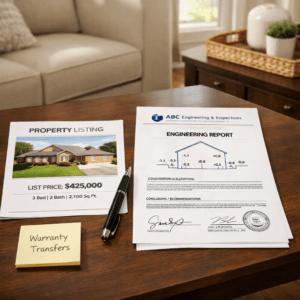
Your foundation is the most structurally critical component of your home. A mistake here — the wrong contractor, the wrong repair method, a warranty that evaporates — can cost you tens of thousands of dollars to fix again. And in North Texas, where foundation repair is practically a local industry unto itself, the choices can feel overwhelming.
There are national franchise operations with massive advertising budgets. There are solo operators who underbid everything. There are companies that send salespeople — not engineers — to assess your foundation and then quote you a repair before anyone qualified has actually diagnosed the problem.
Knowing how to separate the credible from the questionable is one of the most valuable things a homeowner in Tarrant, Wise, or Parker County can learn. This guide gives you the exact questions to ask, the answers to look for, and the red flags that should make you walk away.
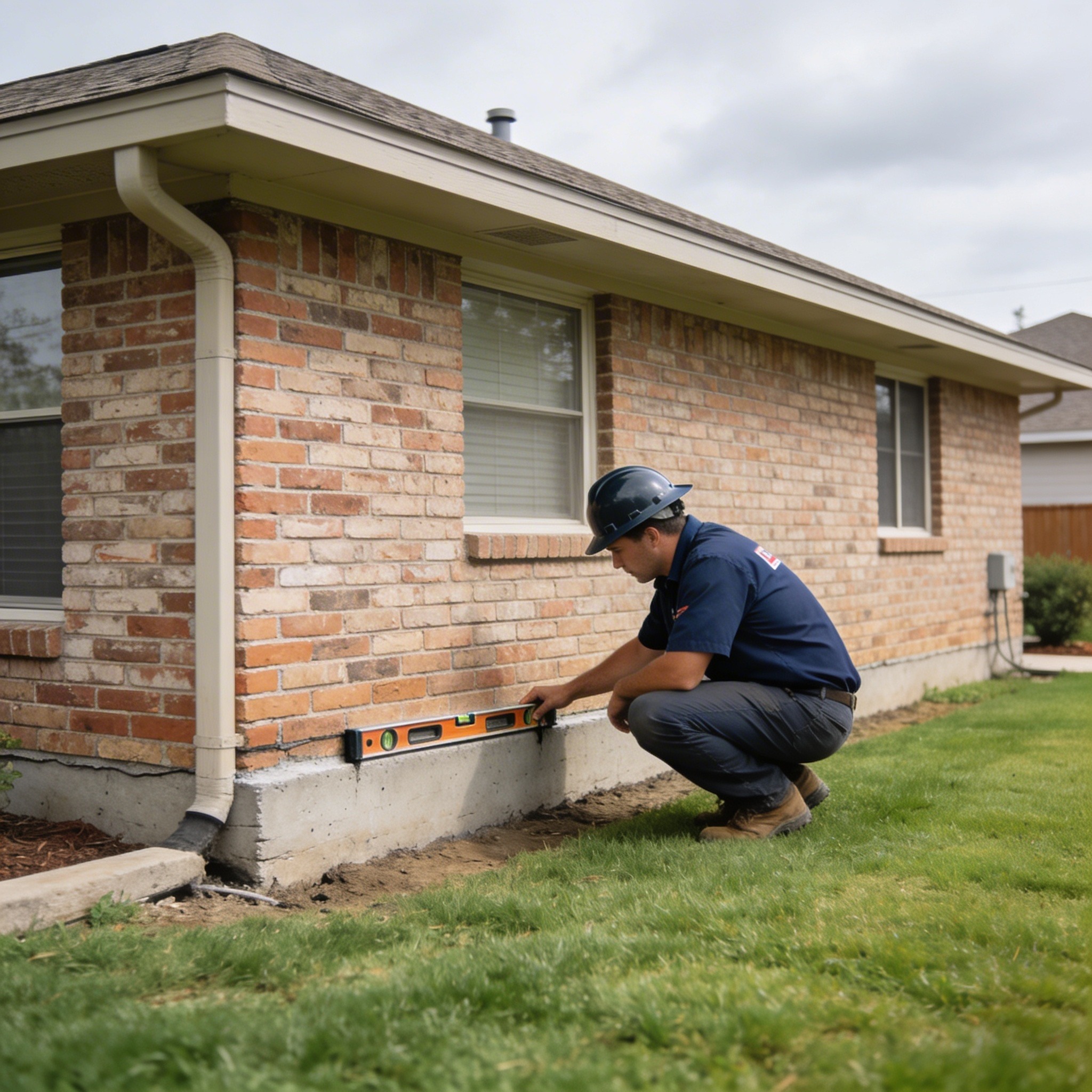
Why Choosing the Right Foundation Contractor Matters More Than You Think
Foundation repair is not a commodity service. Unlike replacing a water heater or painting a room, foundation work involves structural engineering, soil science, and long-term warranty commitments. The quality of the work — and the integrity of the company performing it — determines whether your repair lasts 5 years or 50.
Bad foundation work doesn’t just fail to solve the problem. It can actively make it worse by masking symptoms while the underlying damage continues to progress, or by introducing new stress points into an already compromised structure.
The Texas State Board of Professional Engineers requires that structural repairs to residential foundations be designed or reviewed by a licensed professional engineer. This isn’t a technicality — it’s a consumer protection standard. Any company that proposes to repair your foundation without first engaging a licensed engineer is operating outside that standard, and you should know that before signing anything.
The 10 Questions Every North Texas Homeowner Should Ask
Question 1: Do You Require an Engineering Inspection Before Proposing Repairs?
This is the single most important question on this list.
A credible foundation repair company will not send a salesperson to your home, walk around for 20 minutes, and hand you a repair quote. That is a sales process, not a diagnostic process. The only way to accurately determine what kind of repair your foundation needs — and how many piers, beams, or structural interventions are required — is through a professional engineering inspection performed by a licensed structural engineer.
What to look for: The company requires a third-party structural engineer to inspect the property before any repair scope is defined. The engineering report is provided to you as the homeowner. You own that report.
Red flag: Any company that skips the engineering step and goes straight to a repair estimate is guessing at best and over-selling at worst.
At Tri-County Foundation Repair, every project begins with a $1,100 engineering inspection. The engineer contacts you within 24 hours to schedule the site visit, produces a written report, and that report belongs to you — not us. If you choose us for the repair, the inspection fee is credited against your project total.
Question 2: Is the Engineering Report Mine to Keep, Regardless of Who Does the Repair?
This question separates companies that use the engineering process as a genuine diagnostic tool from those that use it as a sales mechanism.
Your engineering report is a professional document produced by a licensed engineer. It belongs to you. You should be able to take it to three different contractors, get three competing estimates, and choose whoever you trust most.
What to look for: The company confirms clearly and without hesitation that the engineering report is your property and can be used to obtain competing bids.
Red flag: Any resistance, hedging, or conditions placed on how you can use the engineering report.
Question 3: What Does Your Warranty Actually Cover, and for How Long?
Foundation repair warranties vary enormously — and the details matter far more than the headline number. A “lifetime warranty” that only covers the specific piers installed (and excludes any future movement in adjacent areas) is a very different thing from comprehensive coverage that follows the property and transfers to future owners.
Ask for the warranty in writing. Read it carefully. Specifically ask:
- What triggers a warranty claim?
- What does the company do to remedy a warranty issue — re-level, install additional piers, or simply re-inspect?
- Does the warranty transfer to a new owner if you sell the home?
- Are there maintenance requirements that void the warranty?
What to look for: Clear, written warranty terms with specific coverage conditions. Warranties that transfer with the property add meaningful value if you plan to sell.
Red flag: Verbal warranty promises. Warranties with so many exclusion clauses they’re effectively meaningless. Any warranty that requires you to use the same company for all future foundation work or the coverage is voided.
Tri-County Foundation Repair offers the Titan Shield 2-Year Warranty on pier and beam repairs and a lifetime warranty on all pilings pushed to refusal on slab work. Both are provided in writing and are part of the project contract.
Question 4: How Long Has the Company — and Its Leadership — Been Doing This Work?
Company age matters less than leadership experience. A company founded two years ago by a crew leader with 19 years of hands-on foundation work is often a better choice than a 20-year-old franchise operation staffed with rotating crews and commissioned salespeople.
Ask specifically about:
- How long the owner or lead technician has been performing foundation repair (not just the company’s age)
- Whether the crew performing your work is employed by the company or subcontracted
- Whether the same team that does the assessment is involved in the repair
What to look for: Verified, demonstrable experience in foundation repair — not just construction generally. Crews who are employees of the company tend to have stronger accountability than subcontractors.
Red flag: Companies that can’t answer direct questions about crew experience, or who use vague language about “our team” without identifying who is actually doing the work.
Question 5: Are You Licensed and Insured in Texas?
This sounds obvious, but it’s overlooked more often than you’d think, especially when homeowners are comparing a credentialed company to an unlicensed operator quoting 40% less.
In Texas, foundation repair contractors must carry general liability insurance and workers’ compensation coverage. Ask for certificates of insurance — not just a verbal confirmation — and verify that the coverage is current.
What to look for: Current general liability insurance (minimum $1 million per occurrence is standard) and workers’ comp coverage for all employees. Willingness to provide these documents before you sign anything.
Red flag: Any hesitation to provide insurance documentation, or coverage that has lapsed or is in the process of renewal.
Question 6: Do You Offer a Turnkey Solution or Just the Foundation Work?
Foundation repair rarely ends with the foundation. Leveling a pier and beam home, for example, almost always results in interior cosmetic damage — doors that need to be re-hung, trim that has shifted, drywall that needs repair, flooring that needs adjustment. A company that performs only the foundation work and hands you a partially damaged interior is leaving you to coordinate additional contractors on your own.
What to look for: A contractor who either handles post-repair interior work in-house, or has a verified partnership with a construction company that does. This is what a true turnkey solution looks like.
Tri-County Foundation Repair’s partnership with Lawrence Construction Services provides exactly this — a single-source solution from engineering inspection through post-repair completion. You don’t need to find a separate contractor to fix what the leveling process affects.
Red flag: Companies that explicitly disclaim responsibility for any interior effects of the foundation repair. That disclaimer may be technically accurate — foundation work does cause some interior disruption — but a quality contractor manages that transition rather than abandoning you to it.
Question 7: Can You Provide Local References — Specifically in My County?
National franchise companies often have broad testimonial databases but thin local roots. A company that has worked extensively in Tarrant, Wise, and Parker Counties understands the specific clay soil compositions, the drainage patterns, the housing stock characteristics, and the seasonal timing that affects repair quality in this region.
Ask for references from projects completed within the past 12 to 24 months in your specific area. Call those references. Ask specifically:
- Did the crew arrive on time and complete the work as promised?
- Were there any issues after the repair was complete, and how were they handled?
- Would you hire this company again?
What to look for: Willingness to provide verifiable local references. Online reviews on Google, with verified business locations and detailed descriptions, are a strong secondary signal.
Red flag: Companies that deflect the reference request, offer only written testimonials they control, or have no local review presence for a business claiming years of area experience.
Question 8: What Happens If My Foundation Moves Again After the Repair?
Every reputable foundation repair company will tell you that foundation movement can recur, because the clay soil causing it never stops moving. The question is what the company commits to doing about it.
The answer tells you a great deal about how a company views its long-term relationship with its customers.
What to look for: A clear, written process for warranty claims — who you call, how quickly they respond, what the evaluation process looks like, and what remedies are available.
Red flag: Companies that respond to this question with blame-shifting (“if you don’t maintain your soil moisture, that voids the warranty”) without explaining what they do proactively when movement is confirmed.
Question 9: What Repair Method Do You Use, and Why Is It Right for My Situation?
There are multiple repair methods available for both pier and beam and slab foundations. A contractor who only offers one method — regardless of your foundation’s specific diagnosis — is not tailoring the repair to your situation. They’re fitting your situation to their preferred method.
Common methods include steel push piers, helical piers, mudjacking, foam injection, concrete pressed pilings, and various beam/pier replacement approaches. Each has appropriate applications and significant limitations.
What to look for: A contractor who can explain clearly why the recommended method is the correct one for your specific foundation type, soil conditions, and damage pattern — with reference to the engineering report.
Red flag: A one-size-fits-all approach, or a contractor who dismisses all methods except their own without being able to explain the technical reasoning.
Question 10: What Does the Repair Timeline Look Like, and What Disruption Should I Expect?
Knowing what to expect — how many days, what access is needed, whether utilities are affected, and what the post-repair condition of your property will look like — is a basic transparency standard. A contractor who can’t give you a clear timeline and site management plan hasn’t done this enough to have systems for it.
What to look for: A realistic, experience-based timeline with specific milestones. Communication about landscaping, driveway access, utility locations, and interior protection during the work.
Red flag: Vague timelines (“a few days, depending”) without any specifics, or contractors who seem surprised by the question.
The Red Flags Summary: Walk Away If You See These
- No engineering inspection before a repair quote
- The engineering report “belongs” to the company
- Verbal-only warranty promises
- No verifiable local references or reviews
- Crews that are fully subcontracted with no company accountability
- A single repair method offered regardless of diagnosis
- Extreme underbidding without explanation
- High-pressure sales tactics or same-day discount urgency
- No written contract before work begins
Why the Foundation Repair Process Should Always Start With an Engineering Report
If there’s one consistent theme across all ten questions above, it’s this: the engineering inspection is the foundation — in every sense — of a legitimate repair process.
Understanding what the $1,100 inspection covers, what the engineer is actually looking for, and why this step protects you financially is worth reading before you make any calls. Our post on what the $1,100 foundation inspection actually includes covers exactly that.
And if you’ve already noticed warning signs in your home and are wondering whether you’re at the point of needing professional evaluation, our guide on Foundation Issues or Normal House Settling will help you assess what you’re seeing with more confidence.
Ready to get started with a contractor you can trust? Call Tri-County Foundation Repair at (817) 406-4094 or reach out through our contact form. We serve Tarrant, Wise, and Parker Counties — and we’ll always start with the engineering report.
Frequently Asked Questions: Choosing a Foundation Repair Company in Texas
How do I find a reputable foundation repair company in Texas?
Start by verifying that any company you consider requires a licensed structural engineering inspection before proposing repairs. Check for current general liability and workers’ compensation insurance. Read Google reviews specifically mentioning project outcomes and post-repair service — not just general satisfaction. Ask for local references from projects completed in your county within the past two years. A reputable company will answer all of these requests without hesitation.
Does Texas require a permit for foundation repair?
Permit requirements vary by municipality and the scope of the work. Many residential foundation repairs in unincorporated areas of Tarrant, Wise, and Parker Counties do not require a building permit, but work performed within city limits may. More importantly, Texas requires that structural repairs be designed or overseen by a licensed professional engineer — this is the relevant regulatory standard regardless of local permitting rules. Any reputable foundation repair company will engage a licensed engineer as part of the process.
How do I know if a foundation repair company is legitimate?
Ask for their certificate of liability insurance and workers’ comp coverage — and verify it. Ask whether they require an engineering inspection before quoting repairs. Check their Google Business Profile for verified local reviews with detailed descriptions of actual work performed. Search the Texas Secretary of State’s business database to confirm the company is an active, registered business entity. A legitimate company has nothing to hide and will provide all of this without resistance.
What questions should I ask before hiring a foundation repair contractor?
The most important questions are: Do you require a professional engineering inspection before proposing repairs? Does the engineering report belong to me? What does your warranty cover in writing? What repair method do you recommend and why is it right for my specific foundation? Can you provide local references? Are you licensed, bonded, and insured in Texas? What does the complete repair timeline and disruption look like? These questions separate professional contractors from salespeople.
Should I get multiple estimates for foundation repair?
Yes — and you should get those estimates after the engineering inspection, not before. Getting estimates before an engineering report means you’re comparing guesses, not solutions. Once you have the engineering report, take it to two or three contractors and ask each one to explain how their proposed repair addresses the specific findings in the report. This is how you make a genuinely informed comparison.
Is the cheapest foundation repair estimate usually the worst choice?
Not always — but extreme underbidding is a legitimate red flag. Foundation repair has real material and labor costs. A bid that is 40 to 50 percent below competing estimates almost always reflects either fewer piers than necessary, lower-grade materials, subcontracted labor with minimal oversight, or a warranty with significant exclusion clauses. Ask any contractor whose bid is dramatically lower than others to explain the specific scope differences that account for the price gap.
What is a fair price for foundation repair in Texas?
Foundation repair costs in Texas vary significantly based on foundation type, damage severity, repair method, and the size of the home. Minor repairs addressing localized settlement can fall in the $3,500 to $8,000 range. Mid-range repairs involving multiple piers typically run $8,000 to $20,000. Large-scale projects with extensive tunneling or many push piers can reach $25,000 to $30,000 or more. These ranges apply to legitimate, warranted repair work — bids significantly outside these ranges in either direction warrant close scrutiny.
Can I stay in my home during foundation repair?
In most cases, yes. Pier and beam foundation repairs rarely require residents to vacate. Slab repairs — including tunneling projects — are also generally performed while the family remains in the home, though specific rooms may be inaccessible during active work. Your contractor should communicate clearly in advance about any situation that would require temporary relocation, which is genuinely rare.