When homeowners in Tarrant, Wise, and Parker counties first hear about the $1,100 structural engineering foundation inspection required before foundation repair, the most common reaction is sticker shock. We understand—$1,100 feels like a significant investment, especially when you’re already worried about foundation repair costs.
But here’s what most homeowners don’t realize until after their foundation inspection: that $1,100 isn’t just an expense. It’s an investment that typically saves $5,000-$20,000 by preventing unnecessary work, catching problems early, enabling better negotiations, and providing documentation that protects you in multiple ways.
After nearly two decades requiring structural engineering inspections before every foundation repair project in North Texas, we’ve seen firsthand how this investment consistently pays for itself many times over. Let’s break down exactly what you’re getting for that $1,100, why Texas requires it, and how it saves you substantially more than it costs.
Why Texas Requires Structural Engineering Inspections for Foundation Repair
Texas is one of the few states that takes foundation repair seriously enough to require licensed structural engineer involvement. This isn’t bureaucracy—it’s consumer protection based on decades of homeowners being taken advantage of by contractors who either over-estimated needed repairs or under-estimated problems, leaving homes improperly fixed.
According to the Texas Board of Professional Engineers, the requirement for engineering involvement in foundation repair exists because:
Foundation work affects structural integrity and safety. Unlike cosmetic repairs, foundation problems impact your home’s structural stability. Improper diagnosis or repair can create safety hazards.
North Texas soil conditions create unique challenges. Our expansive clay soil requires specialized knowledge to properly diagnose foundation issues and determine appropriate repair methods.
Homeowner protection is paramount. The engineering requirement prevents contractors from recommending unnecessary work or missing critical problems. You get an unbiased professional assessment, not a sales pitch.
Proper documentation protects property value. When you eventually sell your home, proper engineering documentation of foundation repairs maintains property value and prevents buyer concerns.
At Tri-County Foundation Repair, the $1,100 fee covers a comprehensive structural engineering inspection by a licensed professional engineer. This isn’t an optional add-on—it’s the foundation (pun intended) of quality foundation repair in Texas. And importantly, when you proceed with repairs through us, that $1,100 is credited toward your repair costs, effectively making the inspection free when you move forward with necessary work.
What’s Actually Included in Your $1,100 Engineering Foundation Inspection
Let’s break down exactly what happens during your structural engineering foundation inspection and what you receive for your investment:
1. Licensed Structural Engineer Site Visit
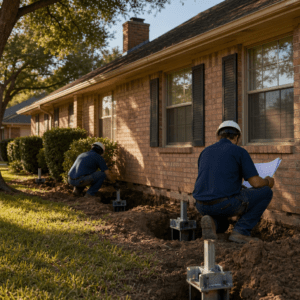
A licensed professional engineer (P.E.) comes to your property for a comprehensive on-site evaluation. This isn’t a technician or sales representative—it’s a degreed, licensed professional who has passed rigorous state examinations and maintains continuing education requirements.
What the engineer does:
- Walks the entire perimeter of your home, examining the foundation from the outside
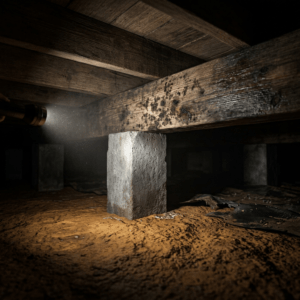
- Accesses crawl spaces (for pier and beam homes) to examine foundation posts, beams, and floor joists
- Inspects the interior, checking for signs of foundation movement in walls, floors, doors, and windows
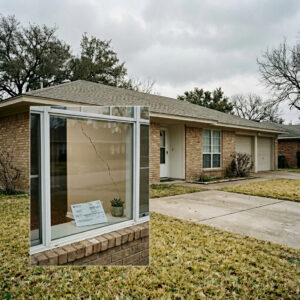
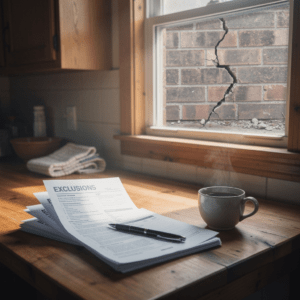
- Examines exterior elements like brick walls, chimneys, and attachments for stress indicators
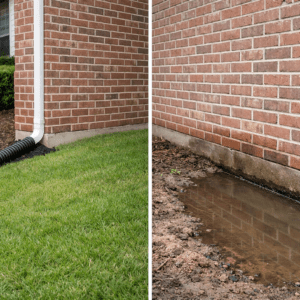
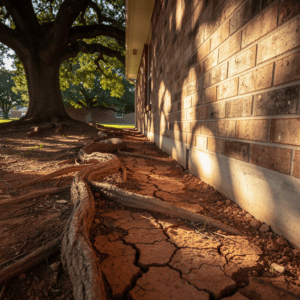
- Looks for underlying causes: drainage problems, plumbing leaks, soil conditions, tree proximity
Time investment: Most structural engineering foundation inspections take 1.5-3 hours depending on home size and foundation type. The engineer isn’t rushing—they’re conducting a thorough structural analysis of your entire foundation system.
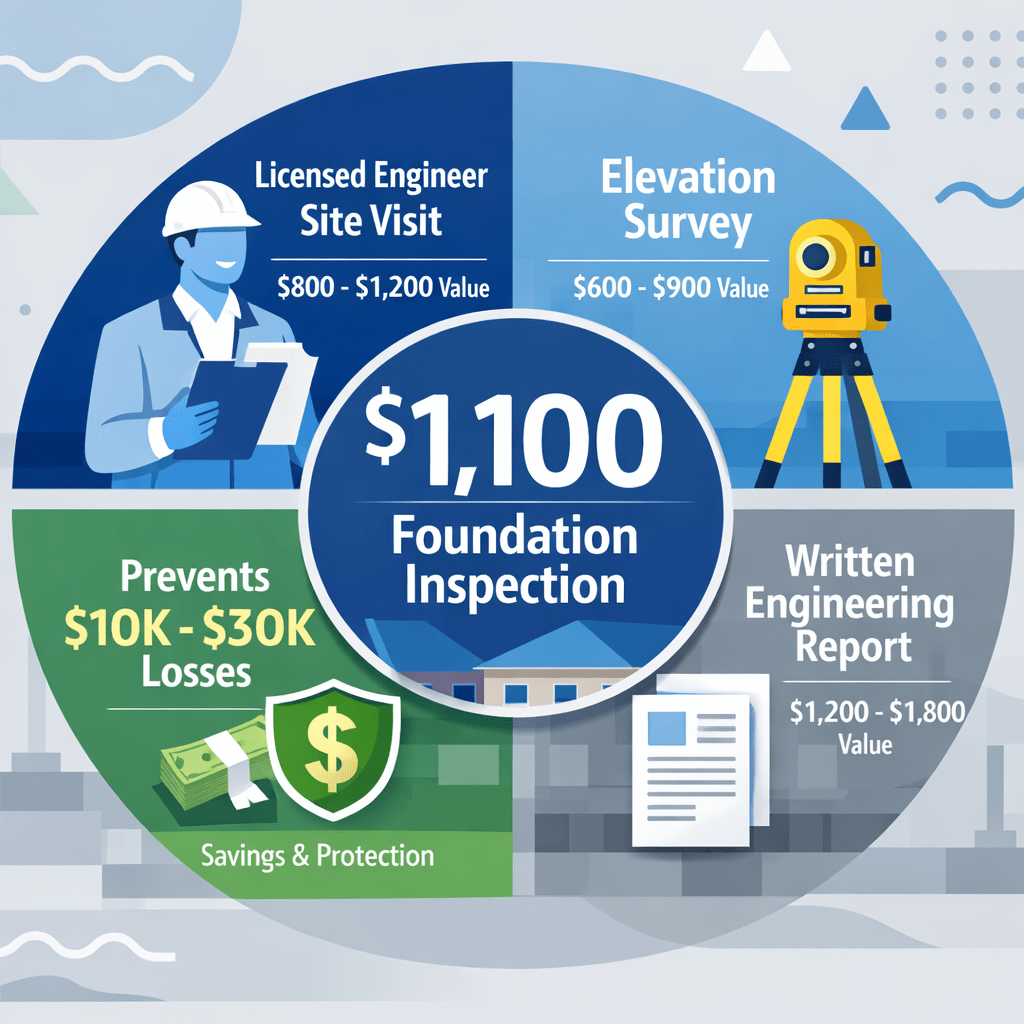
If you hired a structural engineer independently for this same site visit without any repair relationship, you’d typically pay $800-$1,200 just for their time on site, with no written report included.
2. Comprehensive Elevation Survey
This is where the engineering foundation inspection goes far beyond what a typical home inspector or contractor would provide. The structural engineer uses precise leveling equipment to take elevation measurements throughout your home.
What’s measured:
- Multiple points across every room
- Measurements at doorways and transitions
- Perimeter foundation elevations
- Key structural points throughout the home
Why this matters: Foundation settlement isn’t always visible to the naked eye. You might have 1-2 inches of differential settlement (one area settling while another doesn’t) without obvious visible symptoms yet. The elevation survey catches these problems early and quantifies exactly how much movement has occurred.
The elevation data is compiled into a detailed elevation map showing the high points, low points, and areas of differential settlement. This precise data is essential for:
- Determining exactly which foundation piers or sections need repair
- Calculating how much lifting or adjustment is needed
- Establishing a baseline for post-repair verification
- Documenting the extent of foundation movement for records
Independent elevation surveys from professional surveyors typically cost $600-$900 in North Texas. It’s included in your $1,100 engineering inspection.
3. Detailed Written Engineering Report
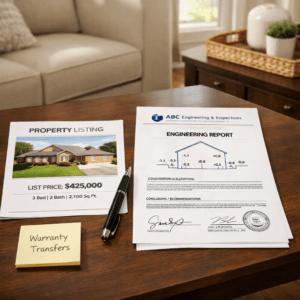
After the site visit and elevation survey, the structural engineer prepares a comprehensive written report. This isn’t a one-page estimate—it’s a detailed technical document that becomes your property and can be used however you choose.
The engineering report includes:
Problem Identification: Specific description of all foundation issues found, including location, severity, and type of damage.
Cause Analysis: Professional determination of what’s causing the foundation problems—soil conditions, drainage issues, plumbing leaks, tree roots, structural overload, or other factors.
Elevation Data: Complete elevation survey results showing exactly where and how much settlement has occurred, presented in easy-to-understand diagrams and charts.
Repair Recommendations: Specific, detailed recommendations for what needs to be repaired, including number and locations of piers or supports, any structural work needed, and address of underlying causes.
Technical Specifications: Details about repair methods, materials, and standards that should be followed to properly address the problems.
Supporting Documentation: Photos of problem areas, diagrams, and technical data supporting the engineer’s findings and recommendations.
This report belongs to you. The engineer works for you, not the contractor. You can take this report to multiple contractors for competitive bids, use it in real estate negotiations, submit it to insurance, or keep it for your records.
Independent structural engineering reports in Texas typically cost $1,200-$1,800 when commissioned separately. At Tri-County Foundation Repair, it’s included in the $1,100 inspection fee that gets credited toward your repairs.
4. Unbiased Professional Assessment
Perhaps the most valuable aspect of the structural engineering foundation inspection is that you’re getting an objective, third-party professional opinion—not a sales pitch.
The structural engineer is a licensed professional with liability for their recommendations. They can’t recommend unnecessary work because their license and professional reputation are on the line. They also can’t minimize problems because they’re professionally and legally obligated to identify structural issues.
This protects you from:
- Contractors who over-estimate needed repairs to increase their profit
- Contractors who under-estimate problems to win bids, leaving issues unfixed
- Uncertainty about whether you really need repairs or someone’s just trying to sell you something
- Confusion about which of several contractor estimates is accurate
5. Documentation for Multiple Purposes
The engineering report serves multiple valuable purposes beyond just guiding your immediate repair decisions:
For Home Sales: When you eventually sell your home, proper engineering documentation of foundation repairs maintains or increases property value. Buyers and their lenders see that work was done properly under engineering supervision.
For Insurance Claims: If foundation problems relate to a covered event (like plumbing leaks), engineering documentation supports insurance claims.
For Real Estate Transactions: If you’re buying or selling, the engineering report provides objective data for negotiations and satisfies lender requirements.
For Lending/Refinancing: Many lenders require engineering documentation before approving loans on homes with foundation concerns.
For Property Records: The engineering report becomes part of your home’s permanent record, documenting that issues were professionally assessed and properly addressed.
For Peace of Mind: Perhaps most importantly, you know definitively what’s wrong with your foundation, what caused it, and what needs to be done. No more wondering, worrying, or losing sleep over uncertainty.
How the $1,100 Investment Saves You Thousands: Real Examples
The $1,100 engineering foundation inspection consistently saves homeowners far more than it costs. Here are real scenarios we’ve seen in Tarrant, Wise, and Parker counties:
Scenario 1: Preventing Over-Repair
A Keller homeowner received three “free estimates” from foundation repair companies:
- Company A: $32,000 (42 piers recommended)
- Company B: $18,000 (24 piers recommended)
- Company C: $8,000 (12 piers recommended)
Confused by the massive range, they invested in the $1,100 structural engineering inspection.
Engineering report findings: 14 piers actually needed, specific locations identified through elevation survey. Recommended repair cost: $11,500.
Result: The engineering inspection revealed that Company A was recommending nearly triple the necessary work ($32,000 vs. $11,500). By investing $1,100 in objective assessment, this homeowner avoided being overcharged by $20,500.
Net savings: $19,400 after accounting for the foundation inspection cost.
Scenario 2: Catching Hidden Problems
A Weatherford homeowner had an obvious crack above a door and got a “free estimate” for $6,200 to repair 8 piers. Seemed reasonable, so they were ready to proceed.
But they decided to get the engineering inspection first.
Engineering report findings: Yes, 8 piers needed repair. BUT the elevation survey also revealed significant settling in another area of the home that hadn’t yet created visible symptoms. Total of 15 piers needed, plus the engineer identified a plumbing leak under the slab that was causing the foundation problems.
Result: Fixing only the 8 visible piers would have left major problems unaddressed. Within months, the hidden settling would have created new damage requiring a second repair. The plumbing leak would have continued causing ongoing foundation movement.
The comprehensive repair (15 piers + plumbing leak repair) cost $14,800 initially. But it prevented a second foundation repair within 12 months that would have cost another $8,000-$12,000.
Net savings: $8,000-$12,000 by catching all problems in one repair instead of multiple repairs, plus avoiding continued damage from the plumbing leak.
Scenario 3: Avoiding Unnecessary Work
A Southlake homeowner noticed minor cracks and called a foundation company that offered a “free foundation inspection.” The company recommended $15,000 in foundation repairs.
Concerned about the cost, the homeowner got a second opinion through a $1,100 structural engineering foundation inspection.
Engineering report findings: The visible cracks were cosmetic stress cracks from normal settling that occurred during the home’s first year. Elevation survey showed the home was level within acceptable tolerances. No foundation repair needed—just monitoring.
Result: $1,100 investment prevented $15,000 in unnecessary foundation work.
Net savings: $13,900, plus avoiding the disruption of unnecessary foundation repair.
Scenario 4: Real Estate Negotiation Leverage
An Azle homeowner was selling their property when the buyer’s home inspector noted foundation concerns and recommended structural engineering evaluation. The buyer requested a $20,000 price reduction or they’d walk.
The seller invested in the $1,100 structural engineering foundation inspection before negotiating.
Engineering report findings: Foundation issues were present but minor. Actual needed repair: $7,500 for 10 piers.
Result: Armed with objective engineering documentation, the seller negotiated a $8,500 credit instead of $20,000. The engineering report prevented over-negotiation because both parties had factual data instead of speculation.
Net savings: $11,500 compared to the initial $20,000 demand (minus the $1,100 inspection cost = $10,400 net savings), plus the sale moved forward rather than falling apart.
Scenario 5: Catching Problems Early
A Fort Worth homeowner noticed a small crack and thought about waiting to see if it got worse. Instead, they invested in the $1,100 engineering inspection.
Engineering report findings: Early-stage foundation settling affecting 6 piers. Current repair cost: $5,800. The engineer noted that if left unaddressed, the problem would likely spread to 12-15 piers within 6-12 months based on soil conditions and drainage issues.
Result: Addressing the problem immediately cost $5,800. Waiting 6-12 months would have cost $14,000-$18,000 as the problem spread.
Net savings: $8,200-$12,200 by catching and fixing the problem before it multiplied in scope and cost.
The Hidden Value: What Else You’re Really Paying For
Beyond the direct cost savings, the $1,100 engineering foundation inspection provides substantial intangible benefits:
1. Elimination of Uncertainty
Before the inspection, you’re worried and uncertain. Is it serious? How bad is it really? Can it wait? What will it cost?
After the inspection, you have definitive answers. You know exactly what’s wrong, what caused it, whether it needs immediate attention, and what proper repairs will cost. The peace of mind has real value—many homeowners tell us they sleep better after getting the engineering report, even if it shows significant repairs are needed, because they finally know what they’re dealing with.
2. Professional Liability Protection
The structural engineer carries professional liability insurance. If their assessment is wrong and you follow their recommendations, you’re protected. They’re legally and professionally accountable for their findings.
With “free estimates” from contractors, you have no such protection. If they miss problems or recommend unnecessary work, you have little recourse.
3. Competitive Bidding Power
With an engineering report in hand, you can get competitive bids from multiple contractors all working from the same specifications. This prevents the confusion of comparing vastly different proposals for different scopes of work.
Contractors know they’re bidding against a defined scope, which often results in better pricing and more honest estimates.
4. Financing Leverage
If you need to finance foundation repairs, having professional engineering documentation typically results in better loan terms. Lenders view engineered repairs as lower risk than unverified contractor recommendations.
5. Insurance Claims Support
If your foundation problems relate to a potentially covered event (plumbing leak, sudden ground movement, etc.), engineering documentation is essential for insurance claims. Without it, most insurance companies will deny foundation-related claims.
6. Future Property Value Protection
When you eventually sell your home, proper engineering documentation of foundation repairs maintains property value. Buyers and their lenders see that work was done right, under professional supervision, following engineering specifications.
Homes with undocumented foundation repairs or no engineering reports often face significant buyer concerns, reduced sale prices, or deals falling apart during the option period.
Why “Free Estimates” Often Cost You More
Many foundation repair companies offer “free estimates” or “free foundation inspections.” Sounds better than paying $1,100 for an engineering inspection, right?
Not so fast. Here’s what “free” really costs you:
Free Estimate Problem #1: Sales-Focused, Not Assessment-Focused
“Free estimate” companies send salespeople, not engineers. Their job is to sell you foundation repair, not provide objective assessment. They have a financial incentive to recommend repairs whether you need them or not, and to recommend more extensive repairs than might be necessary.
Free Estimate Problem #2: No Liability
The person providing your “free estimate” typically has no professional license at stake. If they recommend unnecessary work, they face no professional consequences. If they miss problems, you have little recourse.
Free Estimate Problem #3: No Detailed Documentation
“Free estimates” typically provide a one-page quote listing number of piers and a price. You don’t get elevation surveys, detailed problem analysis, cause identification, or documentation you can use for other purposes.
Free Estimate Problem #4: Limited Usefulness
A “free estimate” from one company can’t be used with other contractors. If you want competitive bids, you need separate “free estimates” from each company—and they’ll all recommend different things because they’re each doing their own cursory assessment.
Free Estimate Problem #5: Hidden Costs
Companies offering “free estimates” build those costs into their repair pricing. You’re not really getting free assessment—you’re paying for it through higher repair costs. Studies of foundation repair pricing show that companies offering “free estimates” typically charge 15-20% more for actual repairs compared to companies that charge separately for professional engineering.
The Real Comparison:
“Free Estimate” Approach:
- No upfront cost
- Sales-focused assessment
- No professional liability
- Limited documentation
- Must get multiple “free estimates” to compare
- Often leads to unnecessary repairs or missed problems
- Higher repair pricing (hidden cost of “free” estimate)
- No useful documentation for other purposes
$1,100 Engineering Foundation Inspection Approach:
- $1,100 upfront (credited toward repairs if you proceed)
- Professional engineering assessment
- Licensed engineer with professional liability
- Comprehensive documentation with elevation survey
- Can use one report to get competitive bids
- Prevents unnecessary repairs and catches hidden problems
- Lower overall costs due to accurate assessment
- Valuable documentation for multiple purposes
Most homeowners who compare both approaches realize the engineering foundation inspection is actually the more economical choice—you’re getting substantially more value, better protection, and typically lower total costs even accounting for the upfront fee.
What Happens During Your Engineering Foundation Inspection: Timeline and Process
Understanding what to expect makes the inspection process less mysterious and helps you prepare:
Step 1: Scheduling (Typically Within 24-48 Hours)
When you contact Tri-County Foundation Repair about foundation concerns, we schedule your structural engineering foundation inspection. Most inspections can be scheduled within 1-2 business days, though we can often accommodate urgent situations faster.
The $1,100 inspection fee is due at scheduling. This can be paid by check, card, or arranged through financing if needed.
Step 2: Pre-Inspection Preparation
Before the engineer arrives, you can help by:
- Clearing access to all areas of your home’s perimeter
- Removing stored items blocking crawl space access (pier and beam homes)
- Making note of all symptoms you’ve noticed (cracks, sticking doors, etc.)
- Having any previous foundation reports available
- Being present to answer questions and point out concerns
The foundation inspection will proceed even if you can’t complete all preparation, but these steps help ensure the most thorough assessment.
Step 3: The On-Site Inspection (1.5-3 Hours)
The licensed structural engineer arrives at your scheduled time and conducts the comprehensive foundation inspection described earlier. You can be present during the inspection (many homeowners appreciate seeing what the engineer finds) or leave them to work independently—your choice.
What the engineer does:
- Exterior perimeter examination
- Interior inspection of all rooms
- Crawl space access and examination (if applicable)
- Elevation survey with precision measurements
- Photo documentation
- Identification of underlying causes
The engineer may ask questions about when you first noticed problems, any recent events (heavy rains, plumbing issues, etc.), and your home’s history.
Step 4: Preliminary Discussion (15-30 Minutes)
After completing the foundation inspection, the engineer typically provides a preliminary verbal overview of findings. This isn’t the full report, but gives you an initial sense of:
- Whether foundation problems are present
- General severity level
- Approximate scope of repairs needed
- Any immediate concerns
This preliminary discussion helps set expectations before the detailed report is prepared.
Step 5: Detailed Report Preparation (24-48 Hours)
The engineer returns to their office and prepares the comprehensive written report including all elevation survey data, analysis, findings, and detailed repair recommendations.
Report preparation typically takes 1-2 business days. You’ll receive the complete report in both digital and physical formats.
Step 6: Report Review and Discussion
Once the report is ready, we schedule a time to review it together. This can be in person, by phone, or via video call—whatever works best for you.
During this review:
- We walk through all findings in detail
- Answer all your questions about the report
- Explain repair recommendations
- Discuss timeline and process if you want to proceed
- Provide detailed cost estimate based on engineering specifications
Step 7: Your Decision
With the engineering report in hand, you have several options:
Option A: Proceed with Tri-County Foundation Repair. The $1,100 foundation inspection fee is credited toward your repair costs, and we’ll schedule the work based on engineering specifications.
Option B: Get competitive bids from other contractors using the engineering report. The report belongs to you and can be shared with any contractor.
Option C: Monitor the situation if the engineer’s report indicates problems are minor or borderline. You’ll have baseline documentation for comparison if symptoms change.
Option D: Use the report for real estate negotiations, insurance claims, or other purposes.
There’s no pressure—the report is yours, and you make the decision that’s right for your situation.
Special Situations: When the Engineering Inspection Is Especially Valuable
While the $1,100 engineering foundation inspection provides value in all foundation situations, it’s particularly critical in these scenarios:
During Real Estate Transactions
If you’re buying or selling a home and foundation concerns arise during the option period, the engineering inspection provides objective data that prevents deals from falling apart or being over-negotiated based on speculation and fear.
For buyers: You know exactly what you’re buying into and have ammunition for fair negotiations. For sellers: You can counter buyer concerns with objective documentation and prevent excessive price reductions.
When Considering a Home Purchase
If you’re thinking about buying a property that has foundation issues or a history of foundation repairs, the $1,100 engineering foundation inspection tells you exactly what you’d be taking on. Many investors and house flippers find that engineering inspections prevent disastrous purchases and help identify profitable opportunities.
After Getting Conflicting Estimates
If you’ve received vastly different repair estimates from multiple contractors and don’t know who to believe, the engineering inspection provides the unbiased answer. This scenario is extremely common in North Texas—conflicting estimates happen all the time because contractors are guessing without proper elevation surveys.
Before Major Home Renovations
If you’re planning significant renovations (additions, second stories, major remodeling), getting a foundation engineering inspection first ensures you’re building on a solid foundation. Discovering foundation problems mid-renovation is far more expensive than addressing them before construction begins.
When Buying/Selling Commercial Property
For commercial real estate, due diligence demands professional engineering documentation. The $1,100 foundation inspection (though commercial properties may require more extensive assessment) is essential for protecting substantial investments.
For Investment/Rental Properties
Property investors benefit enormously from engineering foundation inspections. Accurate foundation assessment allows proper investment calculations, prevents underwater deals, and provides documentation for property management and eventual sales.
The Tri-County Foundation Repair Advantage: Why Our Engineering Inspection Is Different
Not all foundation engineering inspections are equal. Here’s what makes Tri-County Foundation Repair’s engineering foundation inspection process valuable:
1. The Fee Is Credited Toward Repairs
If you choose to proceed with foundation repairs through us, the entire $1,100 inspection fee is credited toward your repair costs. This means the inspection is essentially free when you move forward—you’re just paying for it upfront rather than having it built into inflated repair prices.
2. No Obligation to Proceed
The engineering report belongs to you regardless of whether you hire us. Use it to get competitive bids, for insurance claims, for real estate transactions—whatever serves your interests. We want you to make the best decision for your situation.
3. Truly Independent Engineers
We work with licensed structural engineers who maintain professional independence. They’re not our employees, and they don’t get commissions on repair work. Their only job is accurate structural assessment—this protects both you and us.
4. Comprehensive Elevation Surveys
Some foundation companies skimp on elevation surveys or skip them entirely. We require comprehensive elevation data on every inspection because it’s the only way to accurately assess foundation conditions and determine proper repairs.
5. Fast Scheduling and Quick Report Turnaround
We understand that foundation concerns are stressful and often time-sensitive (especially during real estate transactions). Most inspections can be scheduled within 24-48 hours, and reports are typically delivered within 1-2 business days.
6. Experience with North Texas Soil
Our engineers specialize in North Texas foundations and understand the unique challenges of expansive clay soil in Tarrant, Wise, and Parker counties. This regional expertise results in more accurate assessments and better repair recommendations.
7. Integration with Quality Repair Process
Because the engineering foundation inspection is built into our process, there’s seamless coordination between assessment and repair. The engineer’s specifications guide our work, and post-repair engineering verification confirms everything was done correctly.
8. Transparent Pricing and No Hidden Fees
The $1,100 foundation inspection fee is all-inclusive. No surprise fees, no additional charges for report modifications, no costs for post-repair engineering verification. Transparent pricing from start to finish.
Frequently Asked Questions About the $1,100 Engineering Inspection
Q: Why can’t you just give me a free estimate like other companies?
We can’t provide accurate repair recommendations without proper structural engineering assessment. Texas law requires engineering involvement in foundation repair, and we take that seriously. “Free estimate” companies either ignore the requirement or build the cost into higher repair prices. Our approach is more transparent and typically results in lower total costs.
Q: Can I get the engineering foundation inspection separately and decide later about repairs?
Absolutely. The report belongs to you, and there’s zero obligation to hire us for repairs. Many homeowners use the report to get competitive bids from multiple contractors.
Q: Is the $1,100 really credited if I proceed with repairs?
Yes, 100%. When you approve repair work with Tri-County Foundation Repair, the full $1,100 inspection fee is deducted from your repair invoice. You’re effectively getting the professional engineering inspection for free when you move forward.
Q: What if the engineer finds no problems?
Then you’ve spent $1,100 to confirm your foundation is fine and establish a baseline for future reference. Many homeowners find this peace of mind valuable, especially if planning to sell soon or if symptoms seemed concerning but turned out to be normal.
Q: How long is the engineering report valid?
Most structural engineering reports remain relevant for 1-2 years if conditions haven’t changed. However, if you notice new symptoms or significant time passes, an updated assessment may be warranted.
Q: Can I use the report with insurance claims?
Yes. Engineering documentation is essential for most foundation-related insurance claims. The report identifies causes and can help determine if damage relates to a covered event.
Q: What if I disagree with the engineer’s findings?
You can always seek a second opinion from another licensed structural engineer. However, our engineers are independent professionals with no financial interest in the outcome, so their findings are typically reliable. If you have specific concerns, we’re happy to discuss them.
Making the Decision: Is the $1,100 Engineering Inspection Worth It?
Let’s summarize the value proposition:
What You Pay: $1,100 upfront (credited if you proceed with repairs through us)
What You Get:
- Licensed structural engineer site visit ($800-$1,200 value)
- Comprehensive elevation survey ($600-$900 value)
- Detailed written engineering report ($1,200-$1,800 value)
- Unbiased professional assessment (priceless)
- Documentation for multiple purposes (ongoing value)
Total Direct Value: $2,600-$3,900
What You Save:
- Avoiding over-repair: $10,000-$25,000 in typical cases
- Catching hidden problems: $5,000-$15,000 in additional repairs prevented
- Early problem detection: $8,000-$20,000 by fixing issues before they multiply
- Real estate negotiation protection: $5,000-$15,000 in fair negotiations vs. speculation-based demands
Typical Savings: $10,000-$30,000+
Return on Investment: 900-2,700%
From a pure financial perspective, the $1,100 engineering inspection is one of the highest ROI investments you can make in your home. It consistently returns 10-20 times its cost through better decisions, prevented overpayment, and early problem detection.
But beyond the financial return, consider what you’re really buying:
✓ Certainty instead of anxiety ✓ Facts instead of sales pitches
✓ Professional protection instead of vulnerability ✓ Documentation instead of verbal promises ✓ Peace of mind instead of worry
For most Tarrant, Wise, and Parker County homeowners dealing with foundation concerns, the question isn’t whether the engineering inspection is worth $1,100—it’s whether you can afford to make foundation decisions without it.
Taking the Next Step
If you’re dealing with foundation concerns—whether obvious problems or just symptoms that worry you—professional engineering assessment provides the clarity and protection you need to make smart decisions.
At Tri-County Foundation Repair, we’ve required structural engineering inspections for every project since we started serving North Texas nearly two decades ago. We’ve seen how this protects homeowners, results in better repair outcomes, and ultimately costs less than approaches that skip proper engineering assessment.
The $1,100 engineering foundation inspection includes everything described in this article: licensed structural engineer evaluation, comprehensive elevation survey, detailed written report, and unbiased professional recommendations. And when you proceed with repairs through us, that $1,100 is credited toward your repair costs.
Most engineering inspections can be scheduled within 24-48 hours, with detailed reports delivered within 1-2 business days. The process is straightforward, thorough, and provides the definitive answers you need to protect your most significant investment.
Don’t make foundation decisions based on “free estimates” from salespeople or guesswork about what might be wrong. Invest $1,100 in professional engineering assessment and get objective data that consistently saves thousands while protecting your home’s structural integrity and value.
Your foundation deserves professional engineering assessment. Your investment deserves protection. You deserve facts instead of sales pitches.
Schedule your structural engineering inspection today.
KEY TAKEAWAYS
What’s Included in a $1,100 Foundation Engineering Inspection:
- Licensed structural engineer site visit lasting 1.5-3 hours conducting comprehensive foundation evaluation
- Complete elevation survey using precision leveling equipment measuring multiple points throughout the home
- Detailed written engineering report identifying problems, analyzing causes, and providing specific repair recommendations
- Professional documentation that belongs to the homeowner and can be used for multiple purposes
- The $1,100 fee is credited toward repair costs at Tri-County Foundation Repair, making inspection free when proceeding with repairs
Value Breakdown of Engineering Inspection Components:
- Licensed structural engineer site visit independently costs $800-$1,200 when commissioned separately
- Comprehensive elevation survey from professional surveyors costs $600-$900 independently
- Written structural engineering report costs $1,200-$1,800 when commissioned without repair relationship
- Total independent value: $2,600-$3,900 versus $1,100 all-inclusive inspection fee
Cost Savings from Professional Engineering Assessment:
- Prevents over-repair by identifying exact needed work, typically saving $10,000-$25,000
- Catches hidden problems that “free estimates” miss, preventing additional repairs costing $5,000-$15,000
- Enables early problem detection before damage multiplies, saving $8,000-$20,000
- Provides real estate negotiation leverage preventing speculation-based price reductions of $5,000-$15,000
- Average return on investment: 900-2,700% based on typical scenarios in Tarrant, Wise, and Parker counties
Why Texas Requires Engineering for Foundation Repair:
- Texas Board of Professional Engineers mandates engineering involvement for structural foundation work
- Requirement protects homeowners from over-estimation and under-estimation by contractors
- North Texas expansive clay soil creates unique challenges requiring specialized engineering knowledge
- Licensed engineers carry professional liability and face consequences for improper recommendations
- Proper documentation maintains property value and satisfies lender requirements
Problems with “Free Estimate” Approaches:
- Free estimates come from salespeople rather than licensed engineers with no professional liability
- Companies offering free estimates typically charge 15-20% more for repairs to cover hidden assessment costs
- Free estimates provide limited documentation with no elevation survey or comprehensive analysis
- Multiple free estimates show wildly different recommendations because each uses cursory assessment methods
- Free estimates cannot be used with other contractors for competitive bidding
Engineering Report Applications and Benefits:
- Enables competitive bidding from multiple contractors working from identical specifications
- Provides documentation for home sales maintaining or increasing property value
- Supports insurance claims when foundation issues relate to covered events like plumbing leaks
- Satisfies lender requirements for refinancing or purchasing homes with foundation concerns
- Creates permanent property record documenting professional assessment and proper repairs
- Eliminates uncertainty providing definitive answers about foundation condition and needed repairs
Engineering Inspection Process and Timeline:
- Inspections typically scheduled within 24-48 hours of initial contact
- On-site inspection takes 1.5-3 hours depending on home size and foundation complexity
- Detailed engineering report delivered within 1-2 business days after inspection
- Report belongs to homeowner regardless of whether they proceed with recommended repairs
- No obligation to hire inspection provider for repairs—report can be used to obtain competitive bids
Cost Comparison Scenarios:
- Keller homeowner received estimates ranging $8,000-$32,000; engineering inspection revealed $11,500 actual need, saving $19,400
- Weatherford homeowner’s $6,200 visible problem estimate missed hidden issues; comprehensive assessment prevented second repair saving $8,000-$12,000
- Southlake homeowner avoided $15,000 unnecessary repair through engineering confirmation of cosmetic-only issues, saving $13,900
- Azle seller prevented $20,000 over-negotiation using objective engineering data showing $7,500 actual repair need, saving $10,400
FREQUENTLY ASKED QUESTIONS
How much does a foundation inspection cost in Texas?
A professional structural engineering inspection for foundation evaluation costs $1,100 in Texas for residential properties in Tarrant, Wise, and Parker counties. This comprehensive inspection includes a licensed structural engineer site visit lasting 1.5-3 hours, complete elevation survey using precision leveling equipment, detailed written engineering report with problem identification and repair recommendations, professional cause analysis, photo documentation, and technical specifications. At Tri-County Foundation Repair, the $1,100 engineering inspection fee is credited in full toward repair costs if homeowners proceed with recommended foundation work, effectively making the inspection free when moving forward with repairs. This price is significantly lower than commissioning the same components independently: structural engineer site visits alone cost $800-$1,200, elevation surveys cost $600-$900, and written engineering reports cost $1,200-$1,800 when obtained separately. The $1,100 all-inclusive fee represents substantial value and is required by Texas regulations for proper foundation repair. Some companies advertise “free inspections” or “free estimates,” but these typically involve salespeople rather than licensed engineers and lack comprehensive elevation surveys and detailed documentation.
Is a foundation inspection worth it?
A $1,100 foundation engineering inspection provides exceptional value with typical returns of 900-2,700% through cost savings and proper problem identification. The inspection consistently saves homeowners $10,000-$30,000 by preventing over-repair (saves $10,000-$25,000 in typical cases), catching hidden problems that superficial assessments miss (prevents $5,000-$15,000 in additional future repairs), enabling early detection before damage multiplies (saves $8,000-$20,000), and providing real estate negotiation leverage with objective data (prevents $5,000-$15,000 in speculation-based price reductions). Beyond direct financial savings, the engineering inspection provides: elimination of uncertainty with definitive answers about foundation condition, professional liability protection from licensed engineers, documentation for insurance claims and property sales, competitive bidding power using standardized specifications, and peace of mind replacing worry with facts. Real example: A Keller homeowner received conflicting estimates ranging from $8,000 to $32,000; the $1,100 engineering inspection revealed actual need was $11,500, saving $19,400 compared to the highest estimate. The engineering report belongs to the homeowner and can be used for multiple purposes including obtaining competitive bids, real estate transactions, insurance claims, and refinancing, providing ongoing value beyond immediate repair decisions.
What does a structural engineer look for in a foundation inspection?
During a foundation inspection, licensed structural engineers conduct comprehensive evaluation examining multiple critical factors. Externally, engineers walk the entire property perimeter inspecting the foundation for cracks, settlement, upheaval, and separation from the structure, examine exterior brick or masonry for stair-step cracking patterns indicating foundation movement, assess drainage and grading around the foundation, identify plumbing leaks or water intrusion, note tree proximity and root impacts, and document soil conditions and moisture patterns. Internally, engineers check all rooms for wall cracks particularly above doors and windows, test door and window operation for binding or gaps, observe floor slopes and unevenness, examine gaps between walls and ceilings or floors, and document interior foundation access points. For pier and beam foundations in North Texas, engineers access crawl spaces to inspect foundation posts and piers for settling or deterioration, examine beams and floor joists for sagging or damage, assess crawl space moisture and ventilation, and identify pest damage or wood rot. Engineers use precision leveling equipment to conduct comprehensive elevation surveys taking measurements at multiple points throughout the home to quantify settlement and identify differential movement invisible to naked eye. The engineer then analyzes all findings to determine root causes (soil conditions, drainage, plumbing leaks, structural issues), specify exact repair needs with locations and methods, and provide detailed written documentation of findings and recommendations.
Do I need a structural engineer for foundation repair?
Yes, Texas requires licensed structural engineer involvement for foundation repair to ensure proper assessment and consumer protection. According to Texas Board of Professional Engineers regulations, foundation work affects structural integrity and safety requiring professional engineering expertise, particularly in North Texas where expansive clay soil creates unique challenges requiring specialized knowledge. Without engineering assessment, homeowners face: risk of unnecessary repairs when contractors over-recommend work to increase profits, risk of missed problems when contractors under-estimate to win bids leaving issues unfixed, lack of elevation survey data necessary for accurate problem identification, no professional liability protection if assessment is incorrect, insufficient documentation for property sales or insurance claims, and inability to obtain competitive bids based on standardized specifications. Attempting foundation repair without engineering assessment typically costs more overall because “free estimate” companies that skip proper engineering charge 15-20% higher repair prices to cover hidden assessment costs, problems are often over-estimated or under-estimated requiring additional future repairs, and lack of documentation reduces property value when selling. Texas’s engineering requirement protects homeowners by ensuring unbiased third-party professional assessment from licensed engineers who face professional consequences for improper recommendations, proper elevation surveys quantifying exact settlement amounts, comprehensive documentation satisfying lenders and supporting property value, and repair specifications based on structural analysis rather than sales goals. At Tri-County Foundation Repair, the required $1,100 structural engineering inspection is credited toward repair costs when proceeding with work, making compliance with Texas requirements financially advantageous.
How long does a foundation inspection take?
A professional structural engineering inspection for foundation evaluation typically takes 1.5 to 3 hours for the on-site portion, with timing depending on home size, foundation type, and problem complexity. The complete process from scheduling to receiving the detailed written report spans 2-4 business days. Detailed timeline: Scheduling occurs within 24-48 hours of initial contact at Tri-County Foundation Repair, with urgent situations often accommodated faster. The on-site inspection includes exterior perimeter examination (20-40 minutes), interior inspection of all rooms (30-60 minutes), crawl space access and examination for pier and beam homes (20-45 minutes), comprehensive elevation survey with precision measurements (30-60 minutes), and photo documentation with preliminary findings discussion (15-30 minutes). After the site visit, engineers prepare the detailed written report including elevation survey data compilation and analysis, problem identification and cause analysis, specific repair recommendations with technical specifications, supporting documentation with photos and diagrams, which typically requires 1-2 business days. The homeowner receives the complete report in digital and physical formats and schedules a report review session (30-60 minutes) to discuss findings, answer questions, and review repair recommendations and cost estimates. For comparison, “free estimate” site visits from contractors typically take only 30-45 minutes because they skip comprehensive elevation surveys and detailed analysis, resulting in less accurate assessments. The additional time invested in professional engineering inspection consistently provides superior accuracy and value through proper problem identification and specification.
Can I get a foundation inspection without repair?
Yes, homeowners can obtain a structural engineering inspection without any obligation to proceed with repairs. At Tri-County Foundation Repair, the $1,100 engineering inspection is a standalone service, and the detailed engineering report belongs to the homeowner regardless of whether they hire the company for repairs. Common reasons for inspection-only include: obtaining objective assessment to determine if “free estimate” recommendations are accurate (many homeowners use engineering reports to verify conflicting contractor estimates), establishing baseline documentation for monitoring foundation conditions over time, supporting real estate transactions during buying or selling with objective professional data, obtaining documentation for insurance claims when foundation issues may relate to covered events, satisfying lender requirements for refinancing or home equity loans, getting competitive bids from multiple contractors using standardized engineering specifications, and achieving peace of mind through professional confirmation that concerning symptoms are minor or cosmetic. The engineering report can be used with any contractor, not just the company providing the inspection. Many homeowners obtain engineering inspections specifically to shop for the best repair pricing using the engineer’s specifications as the basis for competitive bids. If homeowners do proceed with repairs through Tri-County Foundation Repair, the $1,100 inspection fee is credited in full toward repair costs. However, there is no pressure or obligation to proceed—the inspection stands alone as a valuable service providing professional structural assessment and comprehensive documentation that serves multiple purposes beyond immediate repair decisions. This approach differs from “free estimate” companies where assessments are sales-focused and cannot be separated from repair commitments.
What should I expect from a foundation inspection report?
A professional structural engineering report for foundation evaluation should include comprehensive documentation providing definitive answers about foundation condition. Required report components include: problem identification section describing all foundation issues found with specific locations, types of damage (settlement, upheaval, cracking), and severity levels; complete elevation survey data presented in easy-to-understand diagrams and charts showing high points, low points, and areas of differential settlement with exact measurements quantifying foundation movement; cause analysis professionally determining what’s creating foundation problems such as soil conditions, drainage issues, plumbing leaks, tree root impacts, or structural overloading; specific repair recommendations detailing exactly what needs to be fixed including number and locations of piers or supports, structural work requirements, and methods for addressing underlying causes; technical specifications describing repair methods, materials, and standards that should be followed for proper problem resolution; photo documentation with images of problem areas, foundation conditions, and supporting evidence; engineering diagrams illustrating foundation layout, problem locations, and recommended repair points; and professional engineer seal and signature verifying the licensed engineer’s professional responsibility for findings and recommendations. The report should be written in language homeowners can understand while maintaining technical accuracy and professional standards. At Tri-County Foundation Repair, engineering reports typically span 15-25 pages with comprehensive documentation. The report belongs to the homeowner and can be used to: obtain competitive bids from multiple contractors, support real estate negotiations with objective data, document foundation conditions for property records, submit insurance claims, satisfy lender requirements, and make informed decisions about repair timing and approach. Reports should clearly distinguish between structural issues requiring immediate attention versus cosmetic concerns that can be monitored, providing homeowners with prioritized recommendations.