Trees are one of the best things about owning a home in North Texas. The mature live oaks and pecans that shade Tarrant County neighborhoods, the cedar elms lining Parker County streets, the hackberries and red oaks that grow fast in Wise County yards: these trees are part of what makes a property feel like home.
They are also among the most underestimated threats to your foundation.
Not because tree roots physically crack concrete the way most homeowners imagine. The reality is more nuanced and, in North Texas specifically, more dangerous. The relationship between mature trees, the soil beneath your home, and the structural integrity of your foundation is direct, measurable, and something every homeowner in this region needs to understand before they plant, prune, or prepare for a foundation repair conversation.
This guide explains exactly how trees damage foundations in North Texas, which species are the biggest risks, what the warning signs look like, and what your options are when trees and foundations are in conflict.
How Tree Roots Actually Damage Foundations in North Texas
The most common misconception about tree root foundation damage is that roots physically push through concrete and break the foundation apart. This does happen in extreme cases with very large trees and very old or compromised foundations. But in North Texas, the far more common and destructive mechanism is much less visible.
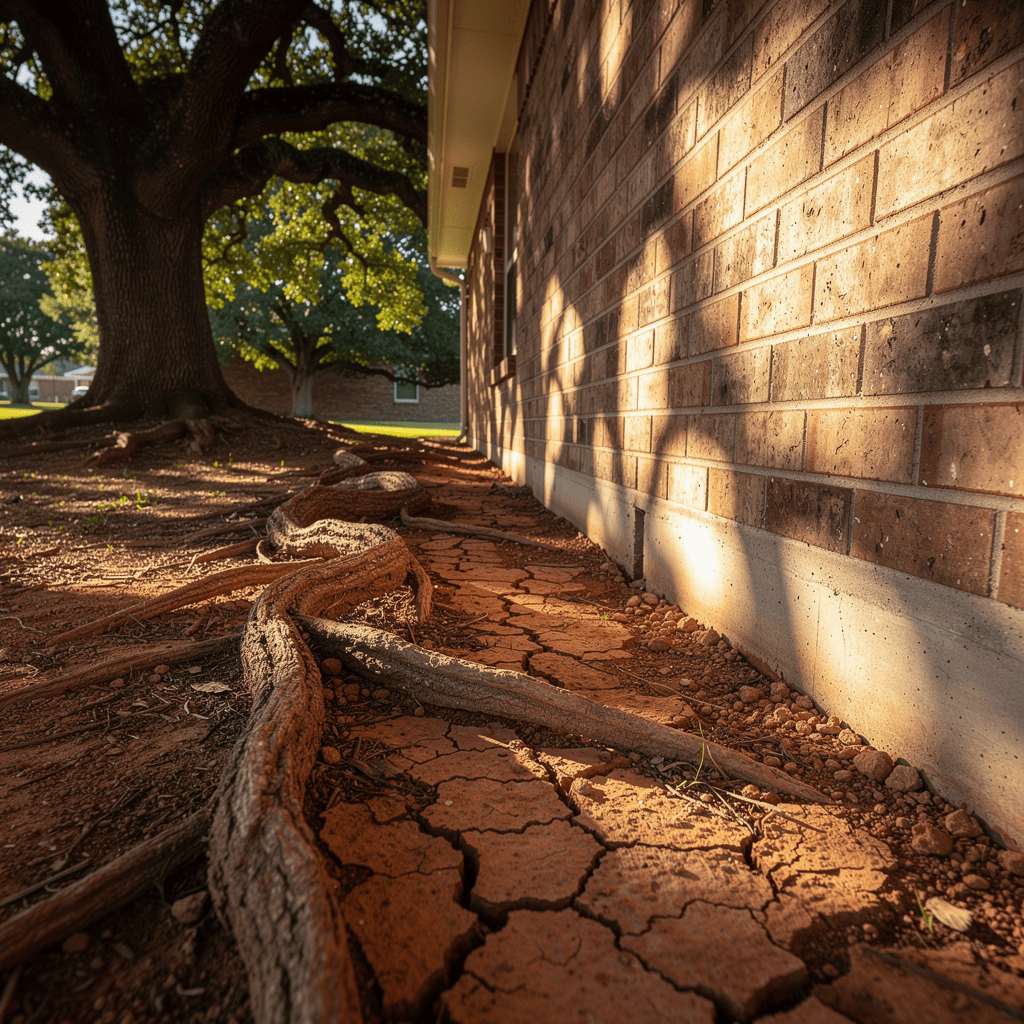
Moisture extraction from clay soil. Tree roots are remarkably efficient at extracting moisture from soil, sometimes from surprising distances and depths. In North Texas, where the soil beneath and around foundations is high-plasticity clay, this moisture extraction creates localized zones of severe dryness.
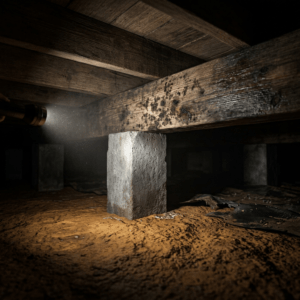
Here is why that matters: clay soil shrinks when it dries. When tree roots draw moisture from the clay soil adjacent to or beneath your foundation, that clay contracts. The foundation above loses support in the areas where clay has shrunk away. The result is differential settlement: one part of the foundation sinks because the clay beneath it has contracted, while the rest of the foundation remains at its original position.
This is the same fundamental mechanism as drought-driven foundation movement, but concentrated and directional. The settlement pattern tends to track the location of the root zone, which makes it diagnosable by an experienced engineer who knows what to look for.
Root intrusion into existing cracks. Once a foundation crack exists, whether from clay movement, settlement, or age, tree roots will follow the path of moisture and oxygen into that crack and expand within it over time. This secondary intrusion mechanism is much less common as an initiating cause of damage but can accelerate deterioration in foundations that already have existing cracks.
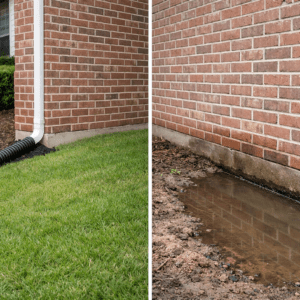
Disruption of drainage patterns. Dense root networks near a foundation can disrupt both surface drainage and subsurface drainage patterns. Roots that block drainage paths or redirect water flow toward the foundation contribute to the moisture imbalance problems that drive clay movement.
Which Trees Are the Biggest Risks in Tarrant, Wise, and Parker Counties?
Not all trees pose equal risk to foundations. The relevant factors are root system aggressiveness, moisture demand, proximity to the structure, and ultimate mature size. In North Texas, the most commonly problematic species are:
Live Oak (Quercus virginiana). One of the most beloved trees in North Texas and one of the most problematic for foundations. Live oaks develop extremely wide, shallow lateral root systems that can extend two to three times the height of the tree in diameter. A 30-foot live oak has a root system that may extend 60 to 90 feet from the trunk. These roots are aggressive moisture seekers in drought conditions.
Pecan (Carya illinoinensis). The state tree of Texas is a heavy water user with deep tap roots supplemented by wide lateral roots. Pecans planted within 20 feet of a foundation, or mature pecans whose canopy has grown over the foundation, represent a significant moisture extraction risk during North Texas summers.
Siberian Elm and Chinese Elm (Ulmus pumila / Ulmus parvifolia). Fast-growing, drought-stressed, and notorious for aggressive root systems. Frequently planted too close to structures because of their rapid early growth rate, they become problematic as they mature.
Hackberry (Celtis occidentalis). Extremely common in North Texas, often self-seeding near foundations. Hackberries have moderately aggressive root systems and high moisture demand. Because they are frequently overlooked as “just a weed tree,” they often grow to substantial size before homeowners address their proximity to the foundation.
Bradford Pear (Pyrus calleryana). Structurally weak trees that are also moderate moisture extractors. Their relatively shallow root systems can create localized clay contraction near foundations.
Cottonwood and Willow species. These are extreme water seekers that should never be planted within 40 to 50 feet of any structure. Their root systems actively pursue any moisture source, including plumbing lines and foundation drainage paths.
Recognizing Tree-Related Foundation Damage
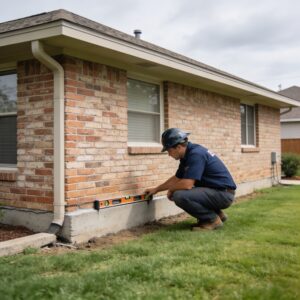
Tree-related foundation damage produces the same general symptoms as other forms of differential settlement. The distinguishing feature, for an experienced engineer, is the pattern: the settlement tends to concentrate on the side of the home closest to the problematic tree and tracks along the line of heaviest root influence.
Symptoms that may indicate tree-related foundation movement:
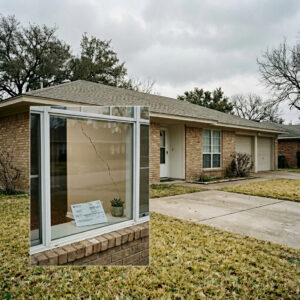
- Diagonal cracks at door or window corners on the side of the home nearest a large tree
- Floor slopes that run toward the tree side of the home
- Doors or windows binding specifically in the rooms closest to the tree
- Visible soil contraction or gap formation between the foundation and the soil on the tree side, even during periods of adequate rainfall
- Exterior brick cracks in a stair-step pattern on the tree-adjacent elevation
If you are seeing any of these symptoms and have large trees within 20 to 30 feet of your foundation, the combination is worth a professional evaluation. Our post on what wall cracks in your home really mean helps you interpret the specific crack patterns that are most likely to be root-related versus other causes of foundation movement.
It is also worth knowing that tree-related damage tends to be most pronounced after extended droughts, when root moisture extraction is most aggressive. If your foundation symptoms worsened significantly during a dry summer, trees near the structure are a strong suspect. We cover how seasonal conditions drive this kind of damage in our post on why North Texas foundation problems get worse in winter, which discusses the seasonal cycle of soil moisture and foundation stress.
How Far Should Trees Be From a Foundation?
General guidance from arborists and structural engineers for North Texas:
| Tree Category | Minimum Recommended Distance |
|---|---|
| Small trees (under 20 ft mature height) | 10 feet |
| Medium trees (20 to 40 ft mature height) | 15 to 20 feet |
| Large trees (over 40 ft mature height) | 20 to 30 feet |
| Live oaks and pecans (any mature size) | 25 to 30 feet minimum |
| Cottonwood, willow, and aggressive species | 40 to 50 feet minimum |
These distances are minimums for newly planted trees. If you already have mature trees closer than these distances to your foundation, removal or root management are the available options. Simply knowing the risk exists is the first step.
Your Options When Trees Are Too Close
Tree removal. The most complete solution when a tree is within the risk zone and actively causing or threatening foundation damage. It is also the most emotionally difficult option for many homeowners who have attachment to mature trees. From a structural standpoint, it is the most effective long-term solution.
Important note: after removing a large tree close to a foundation, the soil that was being depleted of moisture by the root system will begin to rehydrate. This can cause a temporary period of localized soil expansion as moisture returns to the clay in the former root zone. In some cases, this rehydration can itself cause foundation movement. An engineer should assess the timing and implications of tree removal near an active foundation concern.
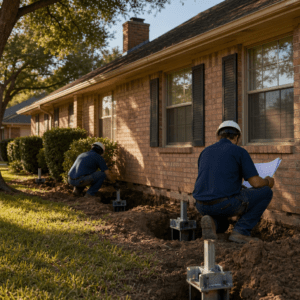
Root barriers. A root barrier is a physical barrier, typically a solid panel of high-density polyethylene, installed vertically in the soil between the tree and the foundation. When properly installed to the correct depth, typically 24 to 36 inches, root barriers redirect lateral root growth away from the foundation zone without harming the tree.
Root barriers are most effective as preventive measures installed when trees are young or when a tree is valuable and removal is not desired. They are less effective against very mature trees whose root systems have already established beneath the foundation zone.
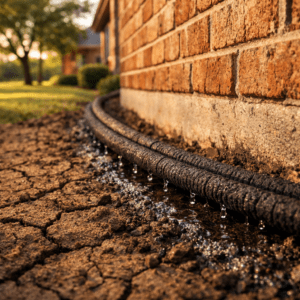
Strategic irrigation management. Maintaining consistent soil moisture along the foundation perimeter through a soaker hose system helps counteract the moisture extraction effect of nearby tree roots. This is not a solution to tree proximity, but it mitigates the worst effects of root moisture extraction during drought conditions by keeping the foundation soil from reaching the extreme dryness that causes the most dramatic settlement.
Documented monitoring. If removal and root barriers are not feasible options, documenting the foundation condition with a professional engineering inspection establishes a baseline. This allows any future movement to be measured against that baseline, which is valuable both for timing intervention and for any insurance or warranty discussions.
Trees, Foundations, and Real Estate Transactions
If you are selling a North Texas home with large mature trees near the foundation, this is a disclosure conversation worth having with your real estate agent before listing. Buyers in this region are increasingly sophisticated about foundation risk, and a large live oak within 15 feet of the front corner of a home will be noticed and questioned.
Having an engineering report documenting the current foundation condition, along with any repairs performed and their warranties, puts you in the strongest possible position regardless of what the trees look like. For more on how foundation documentation affects real estate transactions in this market, see our post on what foundation issues mean for your deal in Tarrant County.
Frequently Asked Questions: Tree Roots and Foundation Damage
Can tree roots damage a foundation in Texas?
Yes. In North Texas, tree roots damage foundations primarily by extracting moisture from the expansive clay soil beneath and adjacent to the foundation. This moisture extraction causes the clay to contract and shrink, removing support from the foundation above and creating differential settlement. The damage mechanism is the same as drought-driven foundation movement, but concentrated in the area of the root system. Physical root intrusion into cracks is a secondary mechanism that is less common as an initial cause but can worsen existing damage.
How close is too close for a tree to a foundation in Texas?
As a general rule, small trees should be at least 10 feet from the foundation, medium trees at least 15 to 20 feet, and large trees including live oaks and pecans at least 25 to 30 feet. Highly aggressive water-seeking species like cottonwood and willow should be 40 to 50 feet from any structure. These distances reflect the moisture extraction radius of mature root systems in North Texas clay soil conditions.
What trees are most dangerous to foundations in North Texas?
The highest-risk species in the Tarrant, Wise, and Parker County area include live oak, pecan, Siberian elm, hackberry, and cottonwood. Live oaks and pecans are the most commonly encountered problem trees because they are large, long-lived, and have extremely wide lateral root systems with high moisture demand. Cottonwood and willow are the most aggressive water seekers but are less commonly planted close to homes deliberately.
Should I remove a tree that is damaging my foundation?
Tree removal is the most structurally effective solution when a tree is actively causing or threatening foundation damage and is within the risk proximity zone. The decision involves balancing structural risk against the aesthetic and emotional value of the tree. If you choose removal, consult a structural engineer first to understand whether the tree’s removal will cause a period of soil rehydration that could itself create temporary foundation movement, and time the removal appropriately.
Do root barriers work for foundation protection in Texas?
Root barriers are effective when installed correctly and at the right depth, typically 24 to 36 inches in North Texas clay soil, between a tree and the foundation. They work best as preventive measures for younger trees or as a supplement to other management strategies. For mature trees with root systems already established beneath a foundation zone, root barriers have limited effectiveness at redirecting existing roots but can limit future expansion.
How do I know if my foundation damage is caused by tree roots?
Tree-related foundation damage tends to produce settlement that concentrates on the side of the home nearest the problematic tree. Crack patterns, floor slopes, and door or window binding will be most pronounced in the rooms or elevations closest to the tree. An experienced structural engineer can identify whether the settlement pattern is consistent with localized moisture extraction from a tree root system versus other causes of foundation movement. A professional engineering inspection is the definitive way to establish causation.
Will my homeowners insurance cover foundation damage from tree roots?
Tree root foundation damage is typically excluded under standard Texas homeowners insurance policies. The damage falls under earth movement and settling exclusions because the mechanism is soil contraction, which is treated the same as general clay soil movement regardless of its cause. Some policies may cover damage from fallen trees that physically impact the structure, but root-driven foundation movement is almost universally excluded.
Can I plant trees near my foundation if I water my foundation consistently?
Consistent foundation watering through a soaker hose system does help mitigate the moisture extraction effect of nearby trees and is strongly recommended for any North Texas homeowner with trees in the proximity zone. However, watering does not eliminate the risk, particularly during severe drought conditions when large, established root systems can extract moisture faster than supplemental irrigation can replace it. Maintaining safe planting distances from the foundation is the only reliable preventive measure.