You just spent real money on your foundation. Maybe it was $8,000. Maybe it was $22,000. Either way, you made a significant investment in the structural integrity of your home — and you want it to last.
Here’s the thing most contractors won’t tell you after the job is done: foundation repair is not a set-it-and-forget-it solution. The Texas clay soil that caused your foundation problem in the first place is still there. It’s still going to expand and contract. It’s still going to respond to every drought, every heavy rain, and every seasonal temperature swing North Texas can produce.
What changes after a professional repair — especially one backed by a solid warranty — is that your foundation is back in its correct position with the right structural support. What you do in the months and years following that repair determines how long it stays there.
This guide gives you a complete, month-by-month maintenance framework for protecting your foundation investment through every season in Tarrant, Wise, and Parker Counties.
Why Foundation Maintenance Matters More in North Texas Than Anywhere Else
Most parts of the country deal with foundation movement as an occasional or regional issue. In North Texas, it’s a permanent condition of homeownership. The Vertisol clay soils that dominate this region don’t become stable after your foundation is repaired. They continue responding to moisture — swelling in wet seasons, contracting in dry ones — for the lifetime of your home.
The goal of post-repair maintenance is not to eliminate clay soil movement — that’s impossible. The goal is to manage the moisture environment around your foundation consistently enough that the clay never reaches the extremes of expansion or contraction that caused the original damage.
Think of it as ongoing management rather than a one-time fix. Homeowners who embrace this mindset after a foundation repair consistently see better long-term outcomes than those who assume the repair alone solved the problem permanently.
The North Texas Foundation Maintenance Calendar
WINTER (December – February): Monitor and Prepare
North Texas winters are mild by most standards, but the freeze-thaw cycling that occurs during cold snaps creates specific stress on recently repaired foundations. Here’s what to focus on:
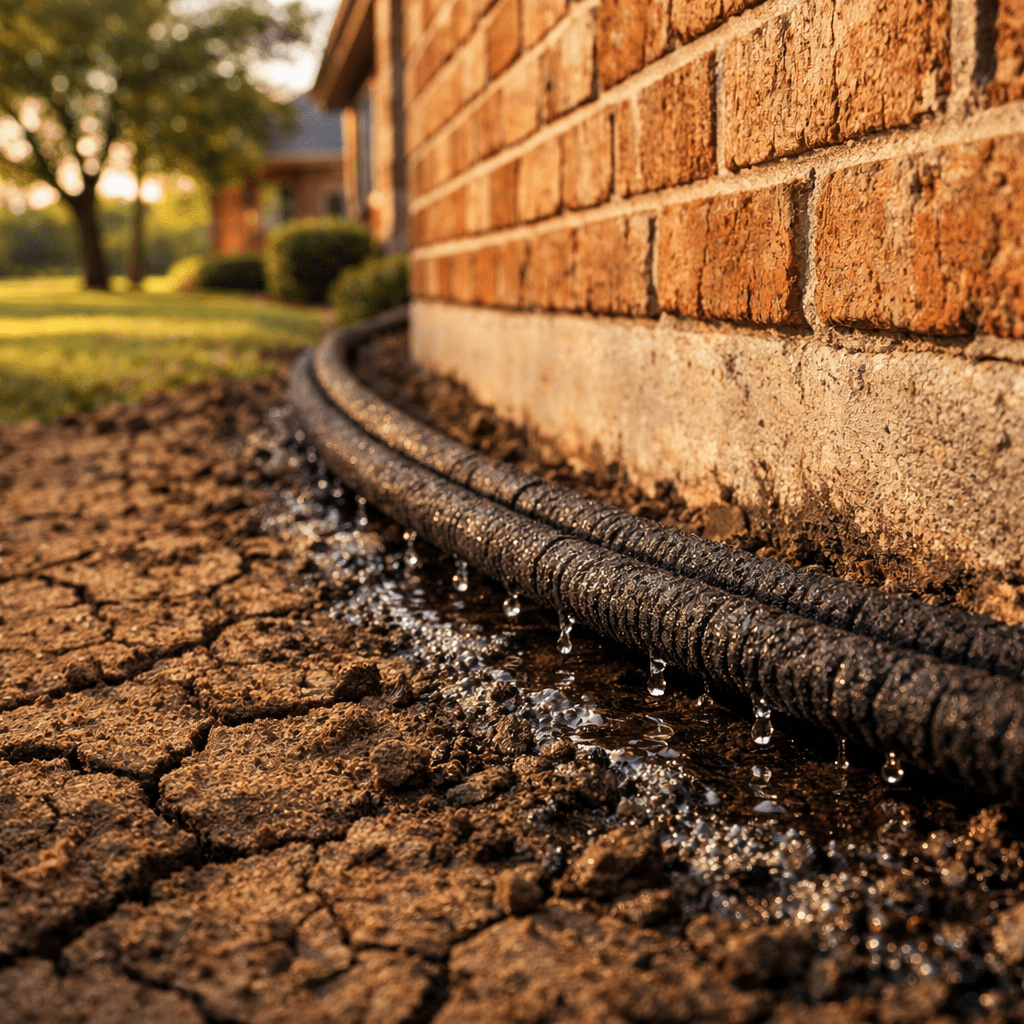
Check and adjust your soaker hose system. Many homeowners shut off their soaker hose systems entirely when temperatures drop, which is understandable — but this can allow the clay to contract significantly during dry winter stretches. Run the system on reduced frequency during mild winter periods and shut off only when hard freezes are forecast. Disconnect and drain hose lines before temperatures drop below 28°F.
Inspect your gutters after leaf-fall. Late fall leaves clog gutters and cause overflow directly against your foundation during winter rain events. Clean gutters thoroughly in November and inspect again after any significant storm.
Watch for signs of new movement. Winter is when foundation problems that have been developing slowly often become visible — doors that start sticking more than usual, new hairline cracks in drywall, or slight changes in floor levelness. Document any new symptoms with photos and dates. This documentation is important if a warranty claim becomes necessary.
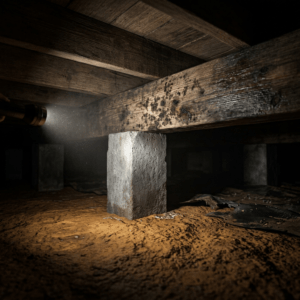
Check your crawl space if you have pier and beam. After significant rain events, look for standing water or evidence of moisture intrusion in the crawl space. Winter soil saturation is a primary driver of pier movement in pier and beam homes.
SPRING (March – May): The Critical Season
Spring is the highest-risk season for North Texas foundations. Heavy spring rains follow dry winters, and the rapid moisture swing — from contracted, dry clay to saturated, swelling clay — is the most common trigger for new foundation movement or warranty-triggering events.
Establish your soaker hose schedule. By March, your soaker hose system should be reconnected, tested, and scheduled. The goal is to prevent the soil from becoming bone-dry on the edges of your foundation even during dry weeks between spring rain events. A consistent schedule — typically 20 to 30 minutes three to four times per week along the foundation perimeter — is more effective than infrequent heavy watering.
Check your yard grading after winter. Soil settles over winter and grading can shift. Walk the perimeter of your home and check that soil slopes away from the foundation at all points. Pay particular attention to areas near downspout termination points where repeated water flow can erode grading.
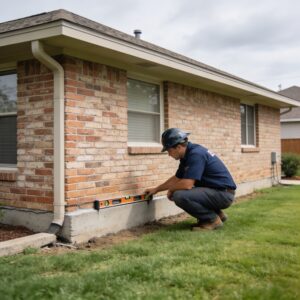
Inspect your exterior for new cracks. Spring is when any movement that occurred over winter becomes most visible. Walk the full exterior of your home and document any new brick mortar cracks, foundation cracks, or separation between the foundation and adjacent concrete (driveways, sidewalks, porches).
Have your plumbing checked. Spring is an excellent time for a slab leak inspection if you have a slab foundation — particularly if your water bill has crept upward without explanation. A small slab leak that begins saturating soil during spring rains can create significant, localized foundation movement within a single season.
SUMMER (June – September): Drought Defense
North Texas summers are the single greatest threat to long-term foundation stability after a repair. Extended drought, combined with temperatures routinely exceeding 100°F, desiccates clay soil to depths that passive watering can barely reach. This is when clay contraction is at its most severe and when pier settlement is most likely to recur.
Run your soaker hose system consistently. This is not optional during a North Texas summer. A soaker hose system running 30 minutes three to four times per week around the full foundation perimeter is the most cost-effective foundation protection measure available. The goal is not to saturate the soil — it’s to prevent it from drying to the extreme shrinkage point.
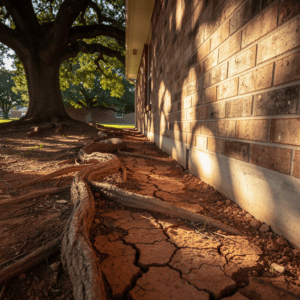
Watch for the perimeter gap. The most visible sign that your soil is contracting dangerously is a gap forming between the soil and the foundation perimeter. If you can see a separation of more than half an inch forming during summer, your watering is insufficient for current conditions. Increase frequency before the gap widens.
Manage trees aggressively. Large trees within 15 to 20 feet of your foundation are extracting moisture from the soil surrounding your structure during summer — competing with your efforts to maintain soil moisture. If removing trees isn’t practical, root barriers are worth considering for mature specimens close to the foundation.
Avoid over-watering. More is not better. The goal is consistency, not saturation. Chronically over-watered soil can cause as much foundation movement through clay expansion as under-watered soil causes through contraction. Water consistently and evenly.
Check HVAC condensate drainage. Air conditioning systems work hard in North Texas summers and produce significant condensate. Confirm your condensate line is draining properly and terminating away from the foundation — not pooling against it.
FALL (October – November): Transition and Inspection
Fall is your reset season — the period to assess what summer put your foundation through and prepare for winter.
Conduct your annual foundation inspection. Walk the full interior and exterior of your home with fresh eyes. Check every door and window for binding or gaps. Look for new drywall cracks, particularly diagonal cracks at the corners of openings. Check floor levelness in rooms where you’ve previously noticed unevenness. Take photos of anything that looks different from your spring documentation.
Transition your soaker hose system. Continue running the soaker hose system into October, reducing frequency as temperatures drop and natural rainfall increases. The goal is to help the clay rehydrate gradually after summer rather than allowing the first heavy fall rain to rapidly saturate bone-dry clay — which creates its own movement risk.
Clean gutters before heavy leaf fall. October and November are gutter maintenance months. Clear gutters twice — once in mid-October and again in mid-November — to prevent overflow during fall rains.
Document your warranty status. If your foundation repair came with a warranty, note its expiration timeline and any inspection or maintenance requirements specified in the warranty terms. Some warranties require periodic professional inspections to remain valid — check the fine print annually.
The Five Non-Negotiable Maintenance Habits
Regardless of season, these five practices form the core of effective foundation maintenance in North Texas:
1. Consistent perimeter moisture management. A soaker hose system set to a regular schedule is the single highest-ROI foundation maintenance investment a North Texas homeowner can make. It costs pennies per day to operate and prevents the moisture extremes that drive clay movement.
2. Grading maintenance. The slope of your yard near your foundation is a maintenance item, not a one-time installation. Soil settles, plants die back, and erosion occurs. Check grading annually and regrade as needed to maintain a consistent slope away from the foundation.
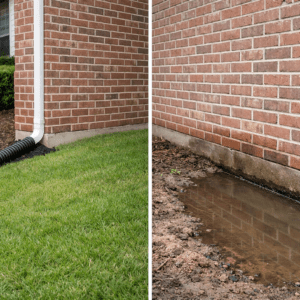
3. Gutter and downspout function. Gutters that overflow and downspouts that terminate too close to the foundation are among the most common — and most avoidable — causes of post-repair foundation movement. Clean gutters seasonally. Extend downspouts if necessary.
4. Tree and vegetation management. Any large tree, shrub, or ground cover planted close to your foundation is actively competing with your moisture management efforts. Keep large trees at minimum 15 feet from the foundation. Avoid planting thirsty shrubs or flower beds directly against the foundation perimeter.
5. Annual self-inspection with documentation. Walk your home interior and exterior twice per year — spring and fall — looking for new cracks, binding doors, or floor changes. Photograph anything notable. This documentation protects your warranty rights and gives a foundation professional critical information if a new assessment is ever needed.
When Maintenance Isn’t Enough: Recognizing New Movement
Even with diligent maintenance, additional foundation movement can occur — particularly after extreme weather events, extended drought years, or significant plumbing failures. Knowing when you’ve crossed from normal post-repair behavior into new movement requiring professional evaluation is important.
Normal post-repair behavior includes very minor settling of newly installed piers as they achieve full load transfer (typically within 60 to 90 days of repair), and hairline cracks in drywall that pre-existed the repair and take time to close fully.
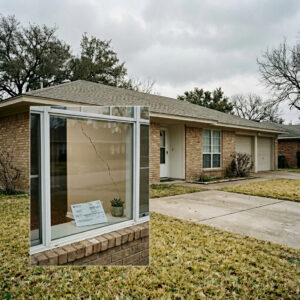
Potentially concerning signs include new diagonal cracks at door or window corners that weren’t present before the repair, floor slopes that have returned or worsened, doors or windows that have re-developed binding after functioning correctly post-repair, or new exterior brick cracks.
If you’re seeing any of these and wondering whether they represent normal variation or something requiring attention, our post on Foundation Issues or Normal House Settling is a useful starting point for self-assessment.
And if you’ve been putting off addressing foundation symptoms because you’re not sure whether they’ve gotten worse, our breakdown of how much waiting actually costs, month by month makes the case for why prompt evaluation is almost always the right financial decision.
Your Warranty Is Only as Good as Your Documentation
One final point that North Texas homeowners often overlook: warranty claims require documentation. If you call your foundation repair contractor two years after the repair and report new movement, the first thing they’ll ask is what has changed — what symptoms are present, when did you first notice them, and has any maintenance been performed.
Homeowners who have kept basic records — seasonal inspection notes, photos with dates, soaker hose schedule, any plumbing or drainage work performed near the foundation — are in a far stronger position to support a warranty claim than those who relied on memory.
Keep a simple foundation maintenance log. It doesn’t need to be elaborate — a note in your phone with the date, a few observations, and a couple of photos is sufficient. This habit has resolved more than a few warranty disputes in favor of the homeowner.
At Tri-County Foundation Repair, we want every repair we perform to be the last one that home ever needs. Our warranty commitments — the Titan Shield 2-Year Warranty on pier and beam work and the lifetime warranty on slab pilings pushed to refusal — reflect that commitment. For a full breakdown of what our engineering-first process includes from inspection through post-repair verification, see our post on what the $1,100 foundation inspection actually covers.
Call us at (817) 406-4094 or reach out online. We serve homeowners across Tarrant, Wise, and Parker Counties.
Frequently Asked Questions: Foundation Maintenance After Repair
How do I maintain my foundation after repair in Texas?
The most important post-repair maintenance practices in North Texas are consistent perimeter moisture management using a soaker hose system, proper yard grading that slopes away from the foundation, clean and functional gutters with downspouts terminating at least 4 to 6 feet from the structure, and management of large trees within 15 to 20 feet of the home. Twice-yearly self-inspections — spring and fall — with photo documentation round out a complete maintenance routine. The goal is preventing the extreme moisture swings in the clay soil that cause foundation movement.
How long does foundation repair last in Texas?
The longevity of foundation repair depends on the method used, the quality of the work, and how consistently post-repair maintenance is performed. Steel push piers driven to load-bearing soil or bedrock are considered permanent structural installations and can last the lifetime of the home. Pier and beam repairs — including beam replacement and pier supplementation — are also highly durable when combined with proper moisture management. The primary risk to repair longevity in North Texas is continued extreme moisture cycling in the clay soil, which is why ongoing maintenance is not optional.
Do I need a soaker hose around my foundation in Texas?
For most North Texas homeowners, yes. A soaker hose system installed around the foundation perimeter and run on a consistent schedule during dry periods is the most cost-effective tool available for preventing the clay soil contraction that drives foundation movement. It prevents the extreme dry-season shrinkage that creates settlement risk and helps the soil rehydrate gradually after rain rather than swinging between extremes. Run at 20 to 30 minutes three to four times per week during dry periods, a soaker hose system costs only a few dollars per week to operate.
How often should I have my foundation inspected after repair?
At minimum, conduct your own visual inspection twice per year — in spring after the wet season and in fall after the summer drought. Professional follow-up inspections are recommended if you notice any new symptoms — door binding, new wall cracks, or floor level changes — that differ from the post-repair baseline. Some foundation repair warranties require periodic professional inspections to remain valid; review your warranty terms specifically for any such requirements.
What voids a foundation repair warranty in Texas?
Warranty terms vary by contractor, so always review your specific warranty document. Common conditions that can affect warranty coverage include plumbing failures that introduce significant localized moisture (particularly slab leaks), major landscape changes near the foundation that alter drainage patterns, or failure to perform specified maintenance requirements listed in the warranty. Some warranties exclude damage caused by acts of nature beyond standard weather patterns. When in doubt, contact your contractor before making significant changes to drainage, landscaping, or plumbing near the foundation.
Can I plant flowers or shrubs against my foundation after repair?
With caution. Dense plantings directly against the foundation perimeter can retain moisture against the concrete or masonry, which creates localized saturation risk. Thirsty plants — including many common flowering shrubs — also compete with your moisture management efforts by drawing water from the soil you’re trying to keep consistently moist. If you want foundation plantings, choose low-water native plants and install them with a small gap between the plant root zone and the foundation edge. Avoid dense groundcovers that prevent visual monitoring of the foundation perimeter.
What should I do if I see new cracks after foundation repair?
Document the crack with a dated photograph and measure its width. Very fine hairline cracks — thinner than a credit card — in drywall are often pre-existing or the result of normal post-repair settling and may close over time. Cracks that are new, growing, or wider than 1/8 inch, diagonal cracks from door or window corners, or cracks accompanied by door or window binding warrant a call to your foundation repair contractor. If your repair is under warranty, contact the contractor promptly — delays in reporting new movement can complicate warranty claims.
How much water does a foundation need in North Texas summers?
There’s no single universal answer because soil composition, foundation size, drainage conditions, and tree proximity all affect the right amount. The practical target is keeping the soil consistently moist — not saturated — to a depth of 12 to 18 inches around the foundation perimeter. A soaker hose running 20 to 30 minutes three to four times per week is a reasonable starting point during average North Texas summers. During exceptional drought years — when the perimeter gap appears quickly despite regular watering — increasing frequency rather than duration is generally more effective. Watch the perimeter gap as your real-time indicator.