If you’re sitting on a foundation problem in North Texas, one of the most practical questions you can ask is this: if I spend $10,000, $15,000, or $20,000 fixing my foundation, what does that actually do to my home’s value?
It’s not a simple question. The answer depends on how the repair is documented, whether it’s warranted, how local buyers perceive foundation history, and what the North Texas real estate market actually does with foundation disclosures. Get it right and a repaired foundation becomes an asset. Get it wrong — or skip the repair entirely — and a known foundation problem can cost you far more than the repair ever would have.
This post breaks down exactly what foundation repair does and doesn’t do to your home’s value, how appraisers treat it, what buyers and their agents actually think, and how North Texas homeowners can position a past repair as a selling advantage rather than a liability.
The Short Answer: Repaired Is Always Worth More Than Unrepaired
Let’s establish the baseline: a home with documented, warranted foundation repair is consistently valued higher than a comparable home with known, unrepaired foundation issues.
This isn’t a matter of opinion — it’s how the math works. In Texas, sellers are legally required to disclose known material defects, which includes foundation problems. A home listed with active foundation issues must either be priced to reflect those issues or the seller must negotiate repair credits during the transaction. Either way, the seller absorbs the cost.
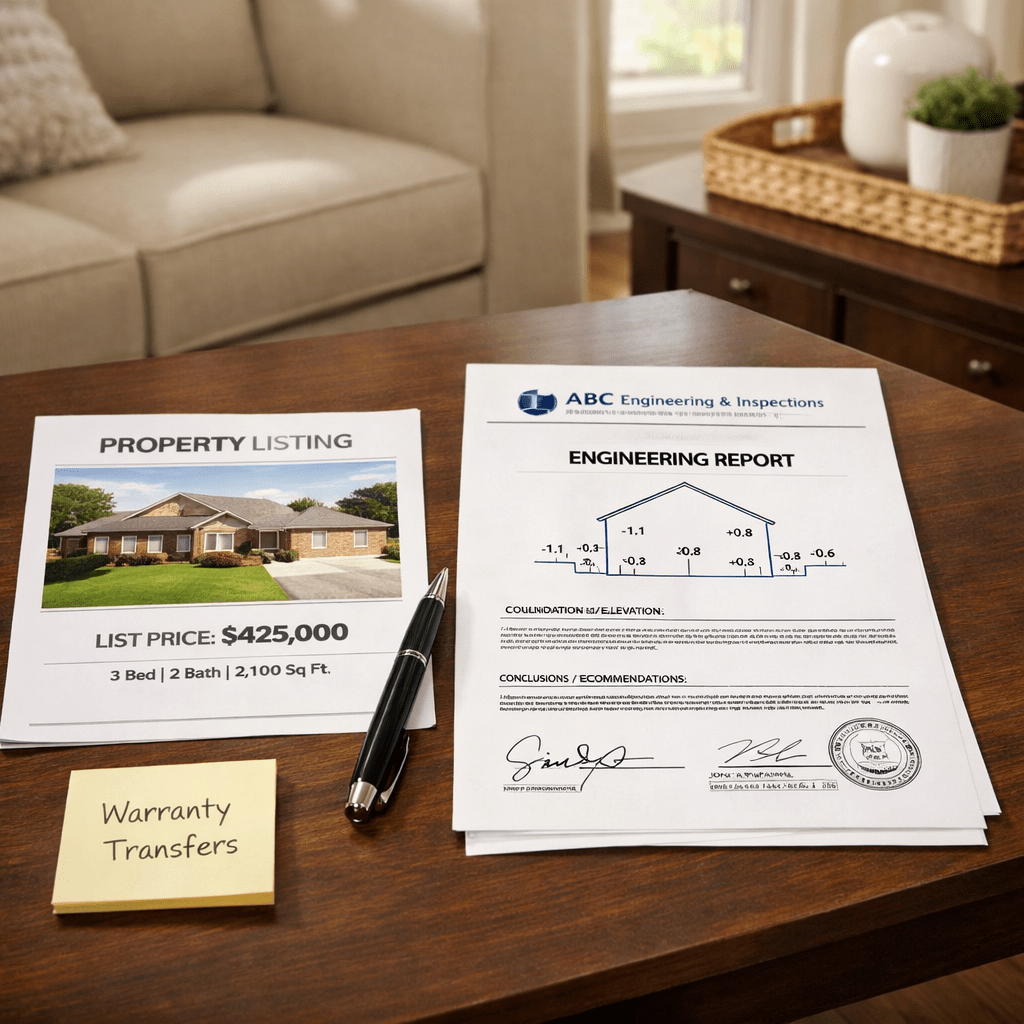
A repaired foundation — especially one backed by a transferable warranty and an engineering report — eliminates that discount and replaces a liability with documentation of resolved damage. That’s a fundamentally different position in a negotiation.
The more precise question is whether foundation repair returns its full cost in added value, and the answer to that is: it depends on how it’s done and how it’s presented.
How Texas Appraisers Treat Foundation Repair
Licensed appraisers in Texas are trained to evaluate foundation condition as part of the overall structural assessment of a home. Here’s how the different scenarios typically play out in an appraisal:
Active, unrepaired foundation damage: An appraiser who identifies visible foundation problems — floor slopes, door/window binding, visible slab cracks, settlement evidence — will typically note the condition and may apply a downward adjustment to the home’s value, flag the property as having deferred maintenance, or condition their appraisal on a professional inspection. In some cases, lenders will not approve financing on a property with active foundation issues until repairs are completed.
Repaired foundation with documentation: A foundation repair that is documented with an engineering report, a detailed scope of work, and a transferable warranty is evaluated differently. The appraiser reviews the documentation, considers the quality of the repair, and evaluates the home on its current structural condition — not its past condition. A well-documented repair can be fully absorbed into the appraised value without any negative adjustment.
Repaired foundation without documentation: This is the worst of both worlds. A homeowner who paid for foundation repair but has no engineering report, no warranty, and no contractor documentation may still face appraiser skepticism. Without documentation, the appraiser has no basis for confidence that the repair was adequate or permanent.
The lesson is clear: documentation is not optional. It’s the difference between a repaired foundation being an asset and it being a question mark.
What North Texas Buyers and Their Agents Actually Think
North Texas buyers — particularly in Tarrant, Wise, and Parker Counties — are more sophisticated about foundation issues than buyers in most other parts of the country. Foundation repair is common enough in this region that experienced agents and buyers understand the difference between poorly documented amateur work and a professional, engineer-directed repair.
What buyers actually respond to:
A transferable warranty is a genuine differentiator. When a foundation repair comes with a warranty that transfers to the new owner, buyers are inheriting both a repaired foundation and a commitment from the contractor to stand behind it. This is a tangible, quantifiable benefit that experienced buyers recognize.
An engineering report builds confidence. The engineering report documents what was wrong, what was done, and that a licensed professional verified the outcome. For a buyer who might otherwise be nervous about any home with foundation history, that report eliminates much of the uncertainty.
Disclosure without documentation creates fear. A seller who discloses past foundation work but can’t produce any paperwork triggers the worst possible buyer response — they assume the repair was informal, inadequate, or hiding something. In competitive markets, this scenario often results in the buyer walking or demanding a significant price reduction that exceeds the actual value of the missing documentation.
For sellers navigating a transaction involving foundation history, our post on what foundation issues mean for your real estate deal in Tarrant County covers the specific disclosure and negotiation dynamics you’ll face.
Does Foundation Repair Return 100% of Its Cost in Value?
Honest answer: not always, and not automatically.
The return on investment for foundation repair depends on several factors:
Repair type and permanence. A properly engineered pier installation with a lifetime warranty on pilings pushed to refusal represents permanent structural improvement. Temporary or surface-level fixes (mudjacking, partial repairs, repairs without engineering oversight) may not be valued equivalently by appraisers or buyers.
Documentation quality. As discussed above, the ROI on a repair with comprehensive documentation — engineering report, contractor warranty, photos, scope of work — is substantially higher than the same repair with no paperwork.
Market conditions. In a strong seller’s market with low inventory, buyers may be less price-sensitive about foundation history. In a balanced or buyer’s market, the same history creates more negotiating leverage for buyers.
Repair cost relative to home value. A $12,000 foundation repair on a $500,000 home may return close to full value in the appraisal. The same repair on a $150,000 home may not. The ratio matters.
What can be said with confidence: in the North Texas market, leaving a known foundation problem unrepaired almost always costs more than fixing it. The combination of mandatory disclosure, lender reluctance to finance homes with active structural issues, and buyer negotiating leverage over unrepaired defects consistently exceeds the cost of a professional repair.
The Hidden Cost of Not Repairing: What Sellers Actually Lose
When a homeowner decides to list a home with known foundation issues rather than repair them, they typically absorb the cost in one or more of the following ways:
Price reduction at listing. Experienced listing agents will recommend pricing the home below comparable properties to account for the foundation condition. This reduction typically exceeds the actual repair cost because buyers demand a buffer for uncertainty.
Repair credit at negotiation. Even if the home is listed without a price reduction, buyers who discover foundation issues — through their own inspection or disclosure review — will negotiate repair credits. These credits are almost always higher than the actual repair cost because buyers price in the inconvenience of managing the repair themselves.
Failed financing. If a buyer’s lender orders an appraisal and the appraiser conditions financing on foundation repair, the deal may fall through entirely. Starting over with a new buyer costs time, carrying costs, and often a lower final sale price.
Extended time on market. Homes with disclosed foundation issues typically sit longer. In North Texas, days on market directly affects final sale price — buyers make lower offers on homes that have been sitting.
When you add these up, the cost of not repairing is almost always higher than the cost of the repair itself. The math simply doesn’t favor delay.
How to Present Foundation Repair as a Selling Advantage
The homeowners who recoup the most value from foundation repair are those who present it proactively and confidently. Here’s how to do that:
Lead with the engineering report. Make the engineering report part of your listing documentation from day one. Don’t wait for buyers to discover foundation history — disclose it upfront with the documentation that demonstrates it was handled professionally.
Highlight the warranty. If your repair carries a transferable warranty, that should be called out specifically in your listing materials. A transferable 2-year warranty or lifetime piling warranty is a marketable feature, not an asterisk.
Use the repair as a trust signal. A seller who proactively discloses, documents, and warrants foundation work signals integrity to buyers. This is especially valuable in North Texas, where buyers are cautious about undisclosed foundation history.
Time the repair before listing. Ideally, foundation repair should be completed and fully documented before the home goes on the market. A fresh repair with a clean post-repair engineering inspection gives buyers nothing to negotiate against.
The Foundation Repair ROI Summary for North Texas Homeowners
| Scenario | Likely Outcome |
|---|---|
| Repaired + engineering report + transferable warranty | Maximum value recovery; repair largely absorbed into appraised value |
| Repaired + documentation but no transferable warranty | Good value recovery; some buyer caution may remain |
| Repaired + no documentation | Mixed; appraiser and buyer skepticism may persist |
| Unrepaired + disclosed | Price reduction or repair credit exceeding repair cost |
| Unrepaired + undisclosed | Legal liability; deal collapse risk; largest financial exposure |
Start With the Engineering Report — Whether You’re Selling or Staying
Whether you’re planning to sell your home or simply want to understand what foundation repair would mean for your investment, the engineering inspection is the first step. It’s the document that makes everything else possible — the repair scope, the warranty, the appraisal confidence, and the buyer’s peace of mind.
We cover exactly what that inspection includes and why it’s worth the investment in our detailed post on what the $1,100 foundation inspection actually includes and why it saves you thousands.
And if you’re already seeing warning signs that suggest your foundation may need attention before you list, our guide on Foundation Issues or Normal House Settling will help you understand what you’re actually dealing with.
Call Tri-County Foundation Repair at (817) 406-4094 or contact us online. We serve Tarrant, Wise, and Parker Counties and start every project with the engineering report that protects your investment — whether you’re repairing, selling, or both.
Frequently Asked Questions: Foundation Repair and Home Value in Texas
Does foundation repair increase home value in Texas?
Foundation repair can preserve and protect home value, but whether it increases value depends on the quality of the repair, the documentation provided, and whether the warranty transfers to future owners. A professionally engineered, warranted foundation repair that is fully documented typically allows a home to be appraised at full market value without a foundation-related discount. Leaving a known foundation problem unrepaired almost always costs more in lost value — through price reductions, repair credits, or failed financing — than the repair itself would have cost.
Do I have to disclose foundation repairs when selling my house in Texas?
Yes. Texas law requires sellers to disclose known material defects on the Seller’s Disclosure Notice, which specifically asks about foundation condition and any previous repairs. Failure to disclose known foundation issues creates significant legal liability. However, disclosure with documentation — an engineering report, warranty, and contractor records — is a far stronger position than disclosure without it. Proactive, documented disclosure is consistently better for sellers than either concealment or disclosure without supporting paperwork.
Will a repaired foundation affect my home appraisal?
A repaired foundation with complete documentation — engineering inspection, scope of work, contractor warranty — generally does not negatively affect a home appraisal. Appraisers evaluate the current structural condition of the home, not its history. A well-documented, professionally executed repair can be fully absorbed into the appraised value. An unrepaired foundation with visible damage, by contrast, will typically result in a downward adjustment or a financing condition requiring repair before closing.
Can a house with foundation issues get financing in Texas?
It depends on the lender and the severity of the issues. Many conventional, FHA, and VA lenders will not approve financing on a home with active, unrepaired foundation problems. Some lenders will condition the loan on a professional engineering inspection and completion of recommended repairs before closing. A home with documented, completed foundation repair generally faces no financing barriers. This is one of the most practical reasons sellers should address foundation issues before listing rather than passing the problem to the buyer.
How much does foundation repair affect home sale price in Texas?
Unrepaired foundation issues typically reduce sale price by more than the actual cost of repair, because buyers price in uncertainty, negotiation leverage, and the inconvenience of managing the repair themselves. Repair credits negotiated during transactions commonly run 110 to 150 percent of the actual repair cost. A professionally repaired and documented foundation, by contrast, typically allows the home to sell at or near full comparable value, meaning the net cost of repair is substantially less than the gross repair expense.
Is it worth fixing foundation before selling a house in Texas?
In most cases, yes — particularly in the North Texas market where foundation issues are common enough that buyers and agents are well-educated about the risks. The combination of mandatory disclosure requirements, lender financing conditions, and buyer negotiating leverage over unrepaired defects consistently results in sellers absorbing more cost through price concessions than the repair would have cost. The exception may be homes at the lower end of the market where repair costs represent a very high percentage of home value — in those cases, pricing to reflect the condition may be more practical than repairing.
Does a foundation repair warranty transfer to new owners in Texas?
It depends on the warranty terms of the specific contractor. Transferable warranties are significantly more valuable — they give buyers an inherited commitment from the contractor, which reduces perceived risk and can be a genuine selling advantage. Always ask specifically whether your warranty is transferable before signing a repair contract. At Tri-County Foundation Repair, warranty transferability is part of the conversation at the project outset.
How do buyers in North Texas respond to homes with past foundation repairs?
Experienced North Texas buyers understand that foundation repair is common in the region due to expansive clay soil. Their response depends almost entirely on the documentation provided. A home with a complete engineering report, professional repair documentation, and a transferable warranty is generally viewed as a known quantity — the problem was identified, professionally addressed, and warranted. A home with disclosed foundation history but no documentation creates anxiety and negotiating leverage for buyers, regardless of the actual quality of the repair performed.