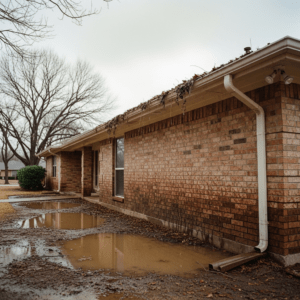
Foundation issues can make or break a real estate transaction in North Texas. Whether you’re buying your dream home in Southlake, selling a property in Weatherford, or flipping houses in Fort Worth, understanding how foundation problems impact real estate deals is crucial for protecting your investment and negotiating effectively.
After nearly two decades helping homeowners and investors navigate foundation concerns during real estate transactions in Tarrant, Wise, and Parker counties, we’ve seen how the right information at the right time can save buyers thousands in negotiations and help sellers close deals that might otherwise fall apart. Here’s everything you need to know about foundation issues in North Texas real estate transactions.
Why Foundation Issues Come Up in Almost Every North Texas Real Estate Deal
If you’re buying or selling in Tarrant, Wise, or Parker County, foundation concerns will likely surface during the transaction process. This isn’t because homes here are poorly built—it’s because North Texas sits on expansive clay soil that creates ongoing foundation challenges.
According to the American Society of Civil Engineers, expansive soils cause billions of dollars in structural damage annually across the United States, with Texas being particularly affected. Our clay soil can expand up to 10% in volume when it absorbs moisture and contract dramatically during drought. This constant movement stresses foundations in ways that homes in other regions never experience.
The result? Foundation-related items appear on the majority of home inspections in our area. The question isn’t whether foundation issues will come up—it’s how significant they are and what you should do about them.
For Home Buyers: What Foundation Issues Actually Mean for Your Purchase
You’ve found the perfect house, made an offer, and then the inspection report arrives with foundation concerns listed. Now what?
Understanding the Inspection Report
Most home inspectors aren’t structural engineers and can only note visible concerns like cracks, door issues, or floor slopes. Their reports typically recommend further evaluation by a foundation specialist or structural engineer. This recommendation doesn’t necessarily mean the foundation is failing—it means a professional should assess whether observed symptoms indicate problems requiring repair.
Minor vs. Major Foundation Concerns
Not all foundation issues are deal-breakers. Here’s how to assess what you’re facing:
Minor Concerns (Usually Negotiable, Not Deal-Breakers):
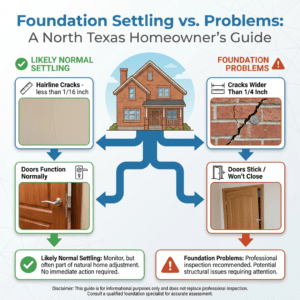
- Hairline cracks less than 1/8 inch wide that haven’t changed over time
- Single small crack in an older home with no other symptoms
- Minor cosmetic settling typical for the home’s age
- Small vertical cracks in poured concrete foundations
- Stable conditions documented in previous inspection reports
Moderate Concerns (Require Professional Evaluation):
- Multiple cracks in different locations
- Cracks between 1/8 and 1/4 inch wide
- Doors or windows that stick but still function
- Minor floor slopes (less than 1 inch over 20 feet)
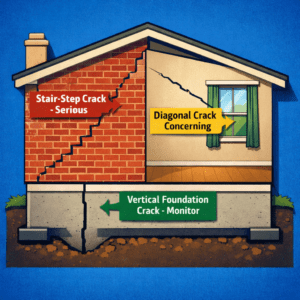
- Stair-step cracks in exterior brick
Major Concerns (Require Immediate Professional Assessment):
- Cracks wider than 1/4 inch
- Rapid changes documented between inspections
- Significant floor slopes (more than 1 inch over 20 feet)
- Multiple doors and windows that don’t function properly
- Visible structural damage or separation
- Previous foundation repairs that failed
Your Options During the Option Period
Texas real estate contracts typically include an option period (usually 7-10 days) when buyers can inspect the property and negotiate repairs or cancel the contract. If foundation concerns arise, you have several paths:
Option 1: Request a Seller Credit Ask the seller to provide a credit at closing equal to estimated repair costs. This gives you control over which contractor performs the work and ensures repairs meet your standards. Get multiple estimates to determine fair credit amounts.
Option 2: Require Repairs Before Closing Request that the seller complete foundation repairs before closing, with proof of work by a licensed contractor and a post-repair structural engineering inspection. This ensures the problem is actually fixed, though you’ll want to verify the quality of work and warranty coverage.
Option 3: Negotiate Price Reduction Instead of credits or repairs, negotiate a lower purchase price reflecting the foundation issues. This works well if you’re paying cash or have financing flexibility, and it gives you complete control over the repair process and contractor selection.
Option 4: Walk Away If foundation problems are severe, repairs would be extensive, or the seller won’t negotiate reasonably, you can cancel during your option period and recover your earnest money (minus the option fee).
Getting Your Own Foundation Engineering Report
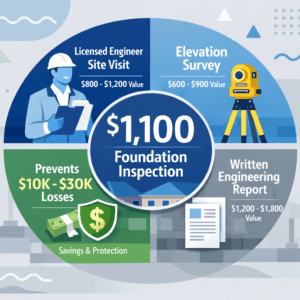
Even if the seller provides an engineering report, consider getting your own $1,100 structural engineering inspection. This investment provides several advantages:
- Unbiased third-party assessment of foundation condition
- Detailed understanding of required repairs and costs
- Leverage in negotiations with concrete numbers
- Peace of mind about what you’re buying
- Documentation you can use to get competitive repair bids
The engineering report belongs to you and provides objective data for negotiations. In our experience, buyers who invest in independent engineering inspections negotiate better deals and avoid purchasing homes with undisclosed major issues.
What You Can Realistically Negotiate
In Tarrant, Wise, and Parker County markets, foundation negotiations typically follow these patterns:
For minor issues ($3,000-$6,000 in repairs), sellers often agree to credits or repairs to keep deals moving. For moderate issues ($7,000-$15,000), expect negotiation—sellers might split costs or offer partial credits. For major issues ($15,000+), significant price reductions or seller-completed repairs are typical, though some sellers may refuse and you’ll need to decide whether to proceed or walk away.
Foundation Issues and Your Mortgage
Conventional loans typically require foundation problems to be addressed before closing if they affect structural integrity or safety. FHA and VA loans have stricter requirements and may not approve financing until repairs are completed. Cash purchases give you complete flexibility to buy “as-is” and handle repairs on your timeline.
Consult with your lender early if foundation issues arise. Some problems that seem minor can create financing obstacles that delay or prevent closing.
Questions to Ask Before Buying a Home with Foundation Issues
- What caused the foundation problem? (Poor drainage, plumbing leaks, soil issues, age?)
- Has the cause been addressed or will it continue creating problems?
- What specific repairs are needed according to a structural engineer?
- What’s the realistic timeline for repairs?
- What warranties will cover the foundation repair work?
- Are there permits for previous foundation repairs?
- How will this affect the home’s resale value?
For Home Sellers: Strategic Foundation Decisions That Protect Your Sale
If you’re selling a home in North Texas, foundation issues may impact your transaction. How you handle them can mean the difference between a smooth closing and a failed deal.
Should You Get a Pre-Listing Foundation Inspection?
A pre-listing inspection gives you control over the narrative and prevents surprises during buyer negotiations. Here’s when it makes sense:
Get a Pre-Listing Inspection If:
- Your home is over 15 years old in an area with known foundation issues
- You’ve noticed cracks, sticking doors, or other warning signs
- You want to price the home accurately
- You’re in a buyer’s market and need competitive advantages
- Previous buyers walked away due to foundation concerns
You Might Skip It If:
- Your home is less than 5 years old with no visible issues
- You’re in a hot seller’s market with multiple competing offers
- You plan to sell “as-is” at a discounted price
- Recent inspection showed no foundation concerns
Repairing Foundation Issues Before Listing
Completing foundation repairs before listing provides several advantages but isn’t always the right choice:
Advantages of Pre-Listing Repairs:
- Eliminates the biggest objection buyers will raise
- Allows you to control contractor selection and quality
- Lets you shop for competitive bids without time pressure
- Provides warranty coverage you can transfer to buyers
- Often results in higher sale prices that offset repair costs
- Reduces days on market
- Minimizes deal-killing surprises during option periods
When to Repair Before Listing: A Southlake seller discovered $9,500 in needed foundation repairs during a pre-listing inspection. They completed the work with full documentation and warranty. Their home sold for $18,000 more than comparable properties with foundation questions, closed in 22 days instead of the typical 45, and had zero negotiation drama. The repairs paid for themselves nearly twice over.
When Not to Repair Before Listing:
- Repairs would exceed 10% of home value
- You’re selling to investors who plan renovations anyway
- Market is so hot that buyers compete regardless
- You don’t have funds for repairs upfront
- Timeline doesn’t allow for proper repair completion
Pricing a Home with Known Foundation Issues
If you choose not to repair before listing, price accordingly:
For minor documented issues ($3,000-$6,000), reduce price by 50-75% of estimated repair costs—buyers will negotiate but you’ve accounted for it. For moderate issues ($7,000-$15,000), reduce price by 75-100% of estimated costs—serious buyers will factor in repair expenses. For major issues ($15,000+), consider pricing 100-125% of estimated repairs—significant problems require aggressive pricing to attract buyers.
Transparency about known issues prevents deals from falling apart during option periods and builds buyer trust.
Disclosure Requirements in Texas
Texas law requires sellers to complete a Seller’s Disclosure Notice documenting known foundation issues. Failing to disclose can lead to legal problems and potential lawsuits after closing. If you’re aware of foundation problems, current repairs, or previous repair work, you must disclose.
Include documentation of any foundation work: engineering reports, contractor invoices, warranties, permits. This transparency actually helps sales by demonstrating you’ve handled problems responsibly.
Responding to Buyer Foundation Requests
When buyers request foundation-related repairs or credits during negotiations:
Have documentation ready: Engineering reports, repair estimates, previous inspection reports. Be willing to negotiate: Rigid sellers often lose deals over repairable issues. Offer solutions, not just refusals: If you won’t do repairs, consider price reductions or credits. Set reasonable boundaries: You don’t have to fix every cosmetic crack, but major structural issues need addressing. Consider the market: In buyer’s markets, you have less leverage to refuse reasonable requests.
The Timeline Factor
Foundation repairs in North Texas typically take 1 day for most pier and beam work and up to 7 days for slab repairs requiring tunneling. Post-repair engineering inspections add another few days. Factor this into your closing timeline—rushing foundation repairs creates quality concerns and can delay closings if not done properly.
For Real Estate Investors and House Flippers: Foundation Issues as Opportunity
Foundation problems often scare off traditional buyers, creating opportunities for investors who understand repair costs and timelines.
Evaluating Investment Properties with Foundation Issues
The key to profitable flips involving foundation work is accurate cost estimation before you buy. Here’s the framework:
Get the Engineering Report Before You Close: Even when buying at auction or “as-is,” invest in the $1,100 structural engineering inspection during your due diligence period. This single investment prevents catastrophic miscalculations.
An investor in Azle bought a property assuming $8,000 in foundation repairs based on visual inspection. The engineering report revealed $22,000 in needed work, plus an additional $4,500 for plumbing repairs from foundation movement. Without that report, the flip would have lost money instead of profiting.
Calculate True All-In Costs: Foundation repair is just the starting point. Also budget for: interior repairs (drywall, flooring affected by foundation work), plumbing adjustments (pipes stressed by foundation movement), door and window adjustments after foundation repair, exterior brick repair if cracks exist, permits and inspections, and carrying costs during repair period (2-7 days for foundation work).
Foundation Issues That Make Sense for Flips:
- Properties with $5,000-$15,000 in straightforward pier and beam repairs
- Homes where foundation issues scared away retail buyers but repairs are standard
- Properties priced at 70% or less of ARV accounting for foundation and related repairs
- Foundation problems where cause is fixable (drainage, plumbing) not ongoing soil issues
Foundation Issues to Avoid:
- Homes requiring over $25,000 in foundation work unless deeply discounted
- Properties with failed previous foundation repairs
- Homes where foundation movement damaged plumbing, electrical, and HVAC extensively
- Foundation problems in areas with ongoing severe soil movement issues
Your Competitive Advantage: Most retail buyers fear foundation problems, even minor ones. As an investor who understands actual repair costs and timelines, you can profit from this fear gap. Buy properties that scare traditional buyers, complete quality repairs with warranty coverage, and sell to retail buyers who want a home with foundation issues already resolved.
Working with Tri-County Foundation Repair on Investment Properties: Our turnkey approach works particularly well for investors. We handle the entire process from engineering inspection through post-repair verification, our 2-3 day timelines for most pier and beam work keep your flip schedule on track, the $1,100 engineering fee is credited toward repair costs, and our Titan Shield 2-Year Warranty on pier and beam repairs (and lifetime warranty on slab pilings) transfers to your buyers, adding value.
Many successful flippers in Tarrant, Wise, and Parker counties use foundation repairs as a competitive advantage, marketing homes as “foundation recently professionally repaired with warranty” instead of hoping buyers don’t notice issues.
The North Texas Foundation Reality in Real Estate Transactions
Foundation concerns are part of buying and selling homes in our region. Our expansive clay soil means foundation movement is common, expected, and manageable with proper understanding.
The biggest mistakes buyers make? Panicking over minor issues and walking away from good homes, or ignoring serious problems and buying into expensive repairs. For sellers, the mistakes are failing to disclose known issues (legal problems), or refusing reasonable repair requests and losing deals.
Smart approach for everyone: get professional engineering evaluation, understand actual repair costs and timelines, negotiate based on facts not fear, and work with contractors who provide warranties and quality work.
Making Foundation Issues Work in Your Real Estate Deal
Whether you’re buying your first home, selling a property you’ve owned for years, or flipping houses for profit, foundation issues don’t have to derail your transaction. With proper evaluation, realistic expectations, and strategic negotiation, foundation concerns become just another factor in the deal—not a deal-killer.
The key is information. A $1,100 structural engineering inspection provides the objective data needed for informed decisions and effective negotiations. This investment often saves buyers thousands in over-negotiations and helps sellers price and position properties correctly.
At Tri-County Foundation Repair, we’ve helped hundreds of buyers, sellers, and investors navigate foundation concerns during real estate transactions in Tarrant, Wise, and Parker counties. We understand the timeline pressures of closings, the need for clear documentation, and the importance of quality work that satisfies lenders, inspectors, and buyers.
If foundation issues have come up during your real estate transaction, or if you’re considering a pre-listing inspection to avoid surprises, professional evaluation provides the clarity needed to move forward confidently. In North Texas real estate, foundation knowledge is negotiating power.
KEY TAKEAWAYS
For Home Buyers:
- Foundation issues appear on most North Texas home inspections due to expansive clay soil—not all indicate serious problems
- Minor foundation concerns (hairline cracks, small stable issues) are typically negotiable and not deal-breakers
- Major concerns (cracks wider than 1/4 inch, multiple symptoms, structural damage) require professional engineering evaluation
- Buyers should consider independent $1,100 structural engineering inspections for objective assessment and negotiating leverage
- Foundation repairs typically take 2-3 days for pier and beam foundations, up to 7 days for slab foundations requiring tunneling
- Conventional, FHA, and VA loans have different requirements regarding foundation repairs before closing
For Home Sellers:
- Pre-listing foundation inspections provide control over the narrative and prevent surprises during negotiations
- Completing foundation repairs before listing often results in higher sale prices that offset repair costs
- Texas law requires disclosure of known foundation issues on the Seller’s Disclosure Notice
- Foundation repairs should be properly documented with engineering reports, invoices, warranties, and permits
- Homes with documented foundation repairs and transferable warranties often sell faster and for more money
For Real Estate Investors:
- Foundation problems scare traditional buyers, creating opportunities for investors who understand repair costs
- Structural engineering inspections before purchase prevent catastrophic cost miscalculations
- Properties with $5,000-$15,000 in straightforward foundation repairs often present profitable flip opportunities
- Foundation repairs with warranty coverage add value and marketability to investment properties
- True cost calculations must include foundation repairs plus related interior, plumbing, and exterior repairs
General Facts:
- Tarrant, Wise, and Parker County homes face ongoing foundation challenges due to expansive clay soil that can expand up to 10% in volume
- Foundation repair costs in North Texas range from $3,500 for minor pier and beam work to $30,000+ for extensive slab repairs
- Engineering inspections cost $1,100 in Texas and provide detailed reports that belong to the property owner
- The Titan Shield 2-Year Warranty covers pier and beam foundation repairs; slab repairs include lifetime warranties on pilings pushed to refusal
FREQUENTLY ASKED QUESTIONS
Should I buy a house with foundation issues?
Buying a house with foundation issues can be a sound decision if you understand the extent of problems and repair costs. Minor foundation issues like hairline cracks or small stable settling are common in North Texas homes and typically cost $3,500-$6,500 to repair. Major foundation problems requiring extensive pier and beam leveling or slab foundation stabilization can cost $15,000-$30,000. The key is obtaining a structural engineering inspection for $1,100 that provides detailed assessment of needed repairs, then negotiating the purchase price or seller credits to account for documented repair costs. Many buyers successfully purchase homes with foundation issues at reduced prices, complete quality repairs with warranty coverage, and build equity immediately.
Can you negotiate foundation repairs when buying a house?
Yes, foundation repairs are highly negotiable in Texas real estate transactions. Buyers typically negotiate through four methods: requesting seller credits at closing equal to estimated repair costs (gives buyer control over contractor selection), requiring sellers to complete repairs before closing with post-repair engineering verification, negotiating purchase price reductions reflecting foundation issues, or walking away during the option period if issues are severe or seller won’t negotiate. In Tarrant, Wise, and Parker County markets, sellers commonly agree to credits or repairs for minor issues ($3,000-$6,000), negotiate shared costs for moderate problems ($7,000-$15,000), and often provide significant price reductions for major foundation work ($15,000+). Having an independent structural engineering report strengthens negotiating position with objective repair cost data.
Should a seller fix foundation issues before selling?
Sellers should fix foundation issues before listing when repairs are moderate ($5,000-$12,000), the home is in a competitive market, timeline allows for quality work completion, and the seller wants to maximize sale price and minimize days on market. Pre-listing foundation repairs often increase sale prices by 150-200% of repair costs and reduce transaction drama during buyer option periods. However, sellers may skip pre-listing repairs if issues are very minor (cosmetic only) or very extensive (exceeding 10% of home value), the property will sell “as-is” to investors, or the seller lacks upfront funds for repairs. When selling without repairs, price reductions should equal 75-125% of estimated repair costs depending on severity, and Texas law requires full disclosure of known foundation problems on the Seller’s Disclosure Notice.
How much does a foundation inspection cost for real estate?
A professional structural engineering inspection for real estate transactions costs $1,100 in Texas for properties in Tarrant, Wise, and Parker counties. This inspection includes a licensed structural engineer site visit, comprehensive elevation survey with measurements throughout the home, detailed written engineering report outlining foundation condition and needed repairs, professional diagnosis of causes, and specific repair recommendations. The engineering report belongs to the property owner and can be used to obtain competitive repair estimates from multiple contractors. At Tri-County Foundation Repair, the $1,100 engineering inspection fee is credited toward repair costs if the property owner chooses to proceed with recommended foundation work, effectively making the inspection free when repairs are completed.
What foundation problems fail FHA inspection?
FHA loans will fail or require foundation repairs before closing when inspections reveal foundation issues that affect structural integrity, health, or safety. Specific problems that typically fail FHA inspection include cracks in foundation walls wider than 1/4 inch, significant floor slopes exceeding FHA tolerance levels (generally more than 1.5 inches in 20 feet), doors and windows that don’t function properly due to foundation movement, visible structural damage or separation in foundation elements, evidence of ongoing foundation failure or progressive movement, and water intrusion through foundation cracks that could affect structural components. FHA also requires previous foundation repairs to be properly documented with permits, engineering reports, and contractor warranties. Unlike conventional loans which have more flexibility, FHA loans must meet HUD’s Minimum Property Standards, meaning foundation problems must be addressed before closing rather than through buyer credits or post-closing repairs.
Will foundation issues affect home appraisal?
Yes, foundation issues affect home appraisals in multiple ways. Appraisers must note visible foundation problems in their reports, and significant issues can result in lower appraised values or appraisal contingencies requiring repairs before closing. Minor cosmetic foundation settling typically doesn’t impact appraised value significantly, but moderate to major foundation problems can reduce appraised values by $10,000-$50,000+ depending on severity and required repairs. In Tarrant, Wise, and Parker County markets where foundation issues are common due to expansive clay soil, appraisers are familiar with typical foundation work and recently completed foundation repairs with warranty coverage may not negatively impact value. However, active foundation problems without documentation of repairs will lower appraised values and can prevent loans from closing if the appraised value falls below the contracted purchase price. Sellers who complete foundation repairs before listing with proper engineering documentation typically receive appraisals reflecting full market value.
How long do foundation repairs take for real estate closing?
Foundation repair timelines in North Texas vary by foundation type and repair extent. Pier and beam foundation repairs typically take 1 day for most projects, including standard leveling and pier replacement work. Slab foundation repairs requiring excavation and tunneling can take 5-7 days depending on accessibility and extent of work needed. After physical repairs are complete, post-repair engineering inspections add 1-2 business days for the structural engineer to verify work quality and provide certification. Total timeline from scheduling to final documentation typically ranges from 1-2 weeks, though emergency situations can sometimes be accommodated faster. For real estate transactions, sellers should allow at least 14-21 days from contract acceptance to closing to accommodate foundation repairs if needed, and buyers should factor repair timelines into their option period negotiations. At Tri-County Foundation Repair, the engineering inspection can be scheduled within 24-48 hours, with the detailed report provided within 48 hours of the inspection, allowing for efficient transaction timelines.