You’ve spotted a crack in your wall. Maybe it’s above a doorway, running along the ceiling, or zigzagging up from the floor. Your first thought? “Is my foundation failing?”
For Texas homeowners in Tarrant, Wise, and Parker counties, this is one of the most common—and most anxiety-inducing—discoveries. The truth is more nuanced than “yes” or “no.” After nearly two decades repairing foundations throughout North Texas, we can tell you that wall cracks tell stories. Understanding what your crack is saying can save you thousands of dollars in unnecessary worry or prevent catastrophic damage if intervention is needed.
Let’s decode what those wall cracks really mean.
Not All Wall Cracks Are Created Equal
The first thing to understand is that wall cracks fall into distinct categories, each with different implications for your foundation.
Cosmetic Cracks: These are surface-level wall cracks in paint or drywall compound, typically caused by minor settling, temperature changes, or poor drywall finishing. They’re annoying but not structural.
Settling Cracks: Most homes experience some minor settling in their first 1-2 years. These wall cracks are typically thin, stable, and don’t indicate ongoing problems.
Foundation-Related Cracks: These cracks result from actual foundation movement and indicate structural stress. They’re the ones that require attention.
Active vs. Dormant Cracks: A crack that appeared five years ago and hasn’t changed is dormant. A crack that’s widening, lengthening, or new is active—meaning your foundation is currently moving.
The key is learning to distinguish between these types, especially in North Texas where expansive clay soil creates unique foundation challenges.
The Crack Patterns That Matter
Different crack patterns indicate specific foundation problems. Here’s what we see most commonly in Tarrant, Wise, and Parker County homes:
Diagonal Wall Cracks (45-Degree Angle)
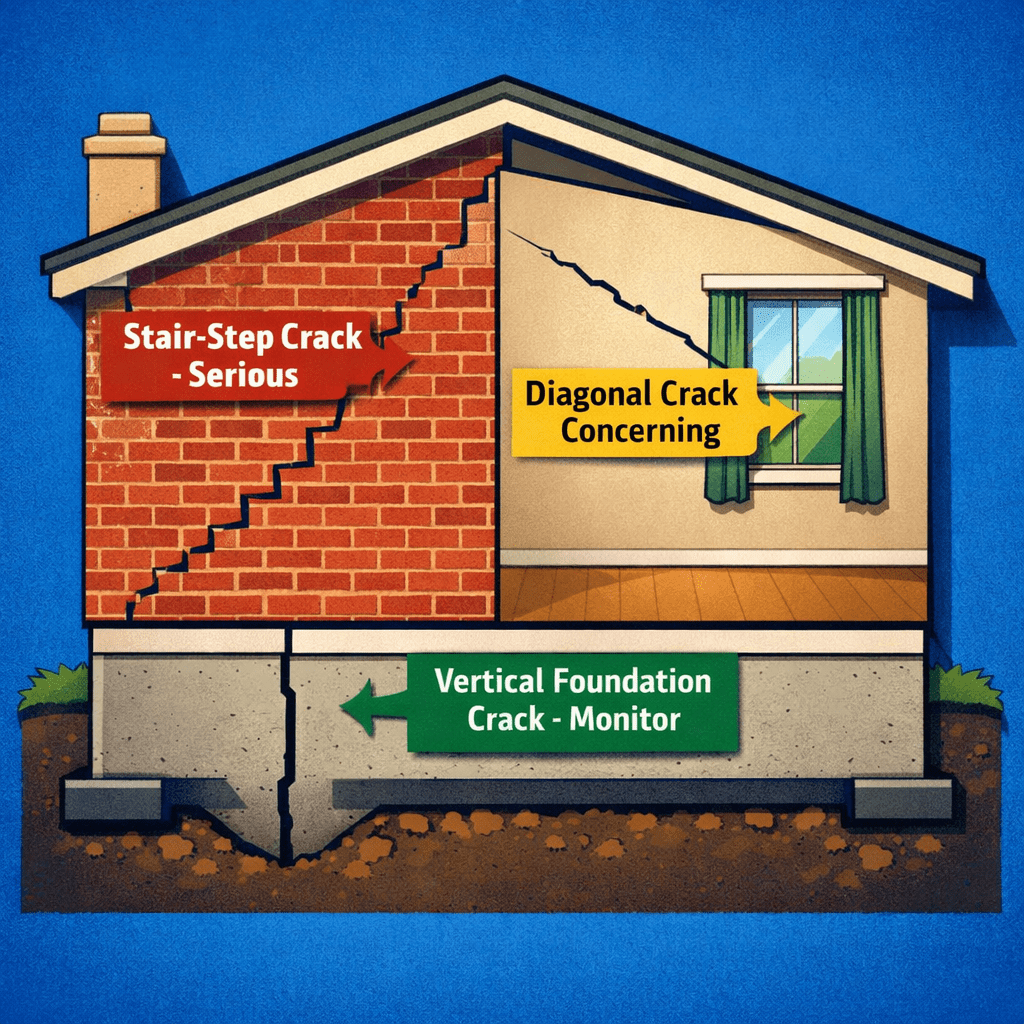
What They Look Like: These wall cracks run at an angle from one corner of a door or window opening toward the ceiling or floor, typically at roughly 45 degrees. They’re often called “stair-step cracks” when they occur in brick or block.
What They Mean: Diagonal wall cracks are the most concerning type because they indicate differential settlement—one part of your foundation has moved while another section hasn’t. In Texas homes sitting on expansive clay soil, this typically happens when moisture levels beneath your foundation are uneven.
Severity Indicators:
- Wall cracks wider than 1/4 inch: Serious concern requiring immediate evaluation
- Cracks that have appeared or widened recently: Active foundation movement
- Multiple diagonal cracks in the same area: Significant structural stress
- Cracks you can see through to the other side: Severe foundation failure
Foundation Type Considerations:
Slab Foundations: Diagonal wall cracks usually indicate the concrete has cracked and settled in specific areas. This is extremely common in North Texas due to our clay soil expanding and contracting with moisture changes.
Pier and Beam: These wall cracks often indicate that perimeter beams or interior posts have settled, causing the floor structure to shift and stress the walls above.
Horizontal Cracks
What They Look Like: Long wall cracks running parallel to the floor or ceiling, often at mid-wall height or along the joint where walls meet the ceiling.
What They Mean: Horizontal cracks along the ceiling line often indicate foundation upheaval or lifting. This happens in Texas when extremely dry clay soil suddenly absorbs moisture and expands, literally pushing your foundation upward.
Horizontal cracks at mid-wall height, particularly in basement or crawl space walls (less common in Texas), can indicate serious lateral pressure and potential wall failure.
Severity Indicators:
- Horizontal wall cracks wider than 1/8 inch: Requires professional evaluation
- Horizontal wall cracks accompanied by bowing walls: Emergency situation
- Cracks that separate completely, creating visible gaps: Active and serious movement
Vertical Cracks
What They Look Like: Straight cracks running from floor to ceiling, or vertical cracks in your foundation itself.
What They Mean: Vertical cracks are the least concerning type in most cases. Many vertical cracks result from concrete shrinkage during curing or minor thermal expansion and contraction. However, context matters significantly.
When to Worry About Vertical Cracks:
- Cracks wider than 1/4 inch
- Vertical cracks accompanied by other foundation symptoms (doors sticking, floor slopes, etc.)
- Cracks that have widened noticeably over time
- Vertical cracks in foundation walls that allow water seepage
When Not to Worry:
- Thin, stable vertical cracks in poured concrete foundations
- Hairline vertical cracks that haven’t changed in years
- Single isolated vertical crack without other symptoms
Ceiling Cracks
What They Look Like: Cracks running along the joint between walls and ceiling, or cracks spanning across ceiling surfaces.
What They Mean: Wall-to-ceiling cracks often indicate foundation movement has stressed the connection between your walls and ceiling structure. In Texas pier and beam homes, these cracks frequently indicate that support beams have sagged, allowing the floor and walls to shift independently from the ceiling.
Ceiling cracks spanning open areas can indicate structural stress in ceiling joists or, in extreme cases, foundation movement causing the entire house to twist or rack.
Severity Indicators:
- Gaps wide enough to insert a credit card or finger: Serious structural movement
- Ceiling cracks accompanied by sagging ceiling areas: Immediate professional evaluation needed
- Cracks that “breathe” (open and close with seasons): Active foundation movement
Stair-Step Cracks in Brick or Block
What They Look Like: Cracks that follow the mortar joints in a stair-step pattern, typically at 45-degree angles.
What They Mean: This is one of the most definitive signs of foundation settlement or heaving. Brick and block walls are rigid and unforgiving—when the foundation moves, these materials crack along their weakest points (the mortar joints).
Severity Indicators:
- Stair-step patterns wider than 1/4 inch: Significant foundation movement
- Multiple stair-step patterns on the same wall: Serious structural concern
- Cracks that extend all the way up the wall: Major foundation failure
- Brick that appears to be pulling away from the house: Emergency situation
In Tarrant, Wise, and Parker counties, we see stair-step brick cracks frequently because our expansive clay soil creates powerful forces that brick walls simply cannot flex with. Unlike wood-framed walls that can shift slightly without damage, brick tells the truth about foundation movement.
Cracks Around Doors and Windows
What They Look Like: Cracks extending from the corners of door or window frames, either upward toward the ceiling or downward toward the floor.
What They Mean: Doors and windows are designed as structural openings with headers that carry the load above them. When foundation movement occurs, these openings act as stress concentration points where movement becomes visible first.
Cracks originating from door and window corners indicate that foundation movement has changed the geometry of these openings, causing structural stress that manifests as visible cracks.
Severity Assessment:
- Hairline cracks: Minor concern, monitor for changes
- Cracks accompanied by doors/windows that no longer operate properly: Foundation movement is affecting function
- Multiple cracks around different openings: Widespread foundation problems
- Diagonal cracks extending from corners: Differential settlement
Understanding Crack Width
Width is one of the most important factors in determining crack severity:
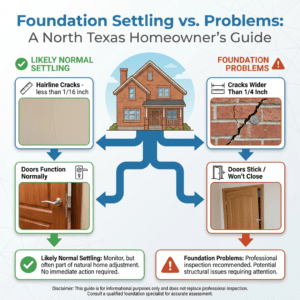
0-1/16 inch (hairline): Usually cosmetic or minor settling. Monitor but typically not concerning unless actively widening.
1/16 – 1/4 inch: Borderline concern. May indicate foundation issues, especially if accompanied by other symptoms. Professional evaluation recommended.
1/4 – 1/2 inch: Serious concern indicating significant foundation movement. Requires engineering inspection.
Over 1/2 inch: Major structural failure requiring immediate professional attention.
Pro Tip: Track crack width over time by marking the ends with a pencil and dating them. If cracks widen noticeably over weeks or months, you’re experiencing active foundation movement.
The Texas Clay Soil Factor
Everything we’ve discussed is influenced by North Texas’s expansive clay soil. This soil behaves dramatically differently than soil in other parts of the country, creating unique crack patterns.
Seasonal Cracking: Many Texas homeowners notice cracks worsening in winter (when soil expands with moisture) and improving somewhat in summer (when soil contracts). If your cracks follow this seasonal pattern, you’re definitely experiencing foundation movement related to clay soil moisture changes.
Differential Movement: Our clay soil rarely expands or contracts evenly across your entire foundation. Trees, drainage patterns, sprinkler systems, and even sun exposure create moisture variations that cause different areas to move at different rates. This differential movement is what creates most foundation-related cracks.
Perimeter vs. Interior: Soil beneath the perimeter of your foundation experiences more dramatic moisture changes than soil under the interior. This is why cracks often appear first around exterior walls in Texas homes.
What About Cracks in Different Materials?
Drywall Cracks: Drywall is relatively forgiving and can hide minor foundation movement. By the time you see significant drywall cracks, foundation movement is usually substantial. However, drywall also cracks from minor causes like humidity changes, poor tape jobs, or house vibration from traffic.
Plaster Cracks: Older North Texas homes often have plaster walls. Plaster is more brittle than drywall and cracks more readily, but plaster cracks are also more definitive indicators of actual structural movement.
Brick and Exterior Masonry: These materials don’t lie. Brick cracks always indicate actual structural movement because brick is too rigid to crack from minor causes. This is why exterior brick cracks are taken so seriously by foundation professionals.
Concrete Foundation Cracks: Cracks in your actual foundation walls or slab are the most definitive evidence of foundation problems. Even minor cracks in concrete indicate significant stress because concrete is incredibly strong in compression.
When to Call a Foundation Professional
Based on nearly two decades repairing foundations in Tarrant, Wise, and Parker counties, here’s when that crack in your wall warrants professional evaluation:
Call Immediately:
- Cracks wider than 1/4 inch
- Cracks that have appeared or widened noticeably in recent months
- Multiple cracks appearing in the same area or throughout your home
- Cracks accompanied by doors sticking, floors sloping, or windows malfunctioning
- Any crack in exterior brick or foundation walls
- Cracks you can see through or feel a draft through
- Gaps between walls and ceilings/floors
Monitor and Evaluate Within a Few Months:
- Hairline cracks that haven’t changed in years
- Single isolated cracks without other symptoms
- Minor vertical cracks in foundation walls
- Cosmetic cracks in new construction settling
Probably Cosmetic:
- Tiny hairline cracks in drywall or ceiling texture
- Cracks only in paint or drywall compound (not through to the drywall itself)
- Spider-web pattern cracks in ceiling texture
- Cracks that appeared during home construction and haven’t changed
The Professional Evaluation Process
When you do call a foundation professional, here’s what proper evaluation involves:
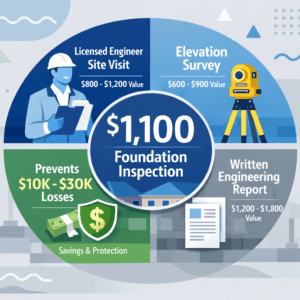
Engineering Inspection: In Texas, quality foundation repair begins with a licensed structural engineer’s inspection. The engineer examines your entire foundation, takes elevation measurements, evaluates crack patterns, and determines the cause and extent of foundation movement.
Detailed Report: You should receive a written engineering report detailing findings, causes, and recommended repairs. This report belongs to you and can be used to obtain multiple repair estimates.
Repair Recommendations: The report specifies what type of repair is needed—whether pier and beam foundation releveling, slab foundation stabilization with pilings, or other interventions.
At Tri-County Foundation Repair, we require this engineering inspection before providing repair estimates. While the $1,100 engineering fee is an upfront cost, it’s deducted from our repair estimate if you choose our services. More importantly, it gives you objective, professional information about your foundation’s condition—not just a sales pitch. Learn more about our step-by-step process here.
What That Crack Is Really Telling You
Here’s the bottom line: That crack in your wall is communication from your home. It’s telling you something about how your foundation is behaving, how the soil beneath your home is moving, and whether intervention is needed.
In Tarrant, Wise, and Parker counties, foundation movement is a reality of homeownership. Our expansive clay soil creates ongoing challenges that homes in other regions simply don’t face. According to the American Society of Civil Engineers, expansive soils cause more damage to structures in the United States than earthquakes, floods, hurricanes, and tornadoes combined. The question isn’t whether your foundation will move—it’s whether that movement is within acceptable limits or requires correction.
Most cracks are warning signs, not emergencies. They give you time to investigate, evaluate, and make informed decisions. The key is knowing when to act and when to simply monitor.
If you’re looking at a crack in your wall right now and wondering what it means, consider these final questions:
- Has it changed recently?
- Are there other symptoms (doors sticking, floors uneven, etc.)?
- Is it wider than a pencil line?
- Does it appear in brick or exterior masonry?
If you answered “yes” to any of these, professional evaluation is warranted. If not, mark the crack, date it, and check it again in three to six months. Cracks that are stable over time rarely indicate serious problems. Cracks that are growing, widening, or multiplying always do.
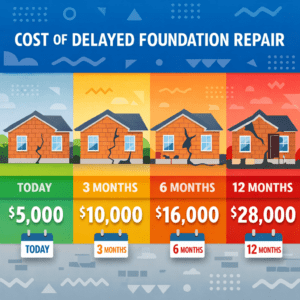
Your foundation supports everything else in your home. That crack might be telling you it needs attention. Listen to what your house is saying—it could save you tens of thousands of dollars and protect your most valuable investment.